Is that snake dangerous?

Look it up by name. Every profile answers that question in its first line, then says what to do and where each fact comes from.

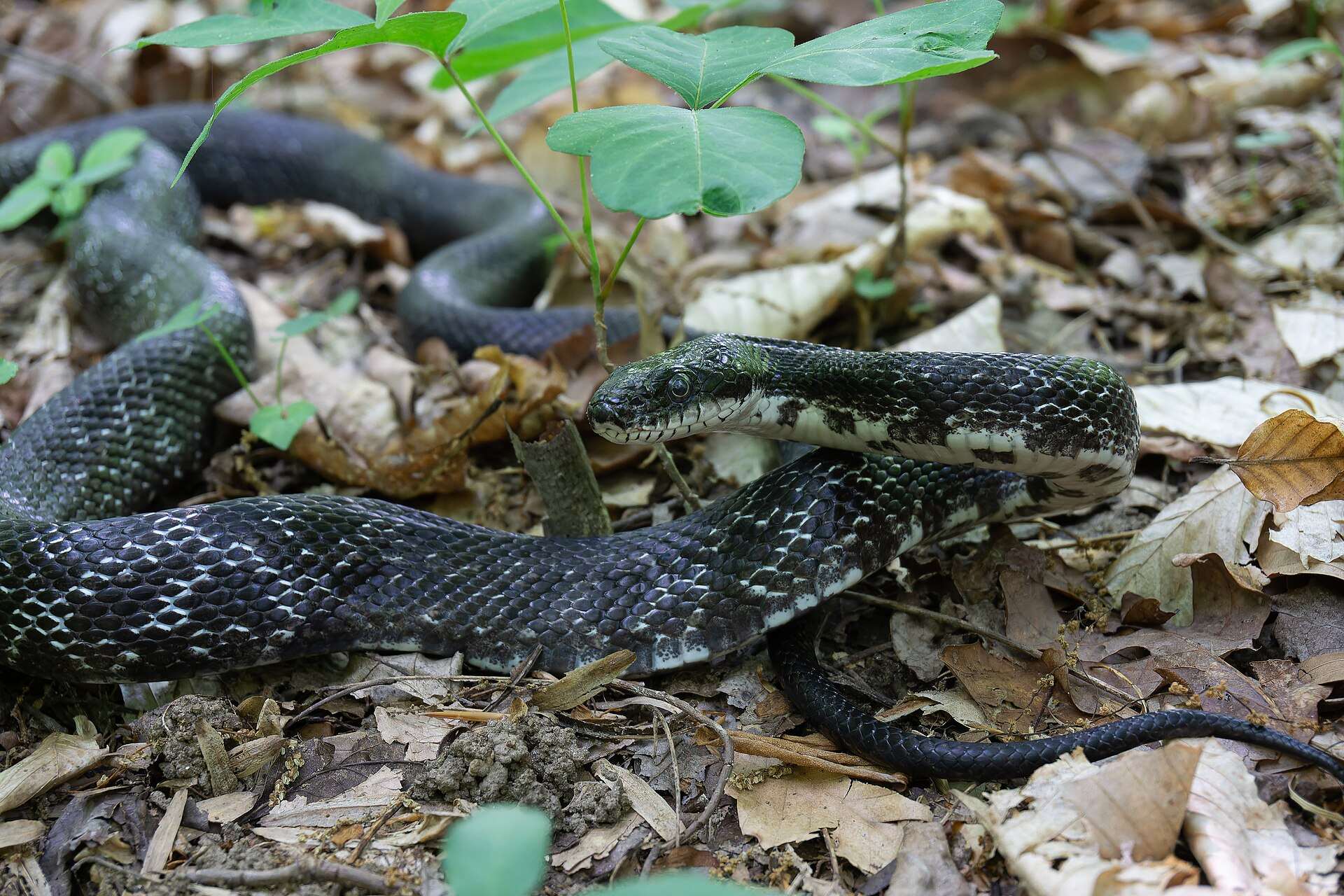
Try Common krait, Russell's viper or Indian rat snake.

Bitten? First aid

4,249 species listed, 57 with full, sourced profiles so far. Browse them all

Saw a snake?

Stay calm. Step back. Let it go.

Many bites happen when people try to catch, kill or move a snake. Distance is the best protection.

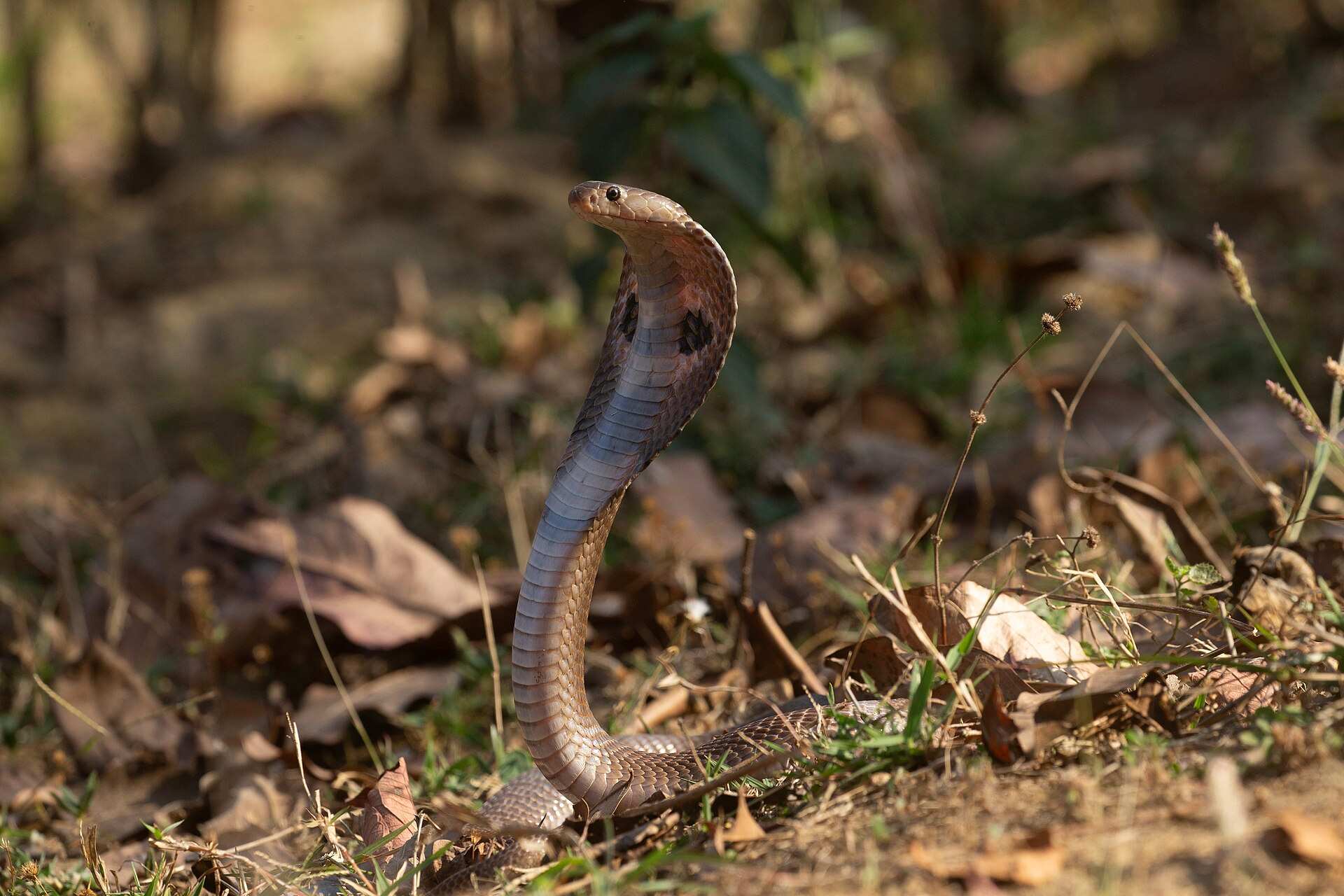
Brown Indian cobra rearing up among dry leaves and grass, its hood spread and dark throat spots visible
This one is an Indian cobra.Medically significantPhoto: Davidvraju · CC0
  1. 01

    Step back slowly

    Give it space and a way out. Don’t corner it.

  2. 02

    Never catch or kill it

    Leave it alone, even if it looks dead. If it’s indoors, call a local rescuer.

  3. 03

    Treat it as venomous

    If you can’t identify it for certain, assume it is dangerous.

Bitten? Go to a hospital now. Don’t cut, suck or tie the wound.First aid

Dangerous or harmless?

One can kill. One is harmless.

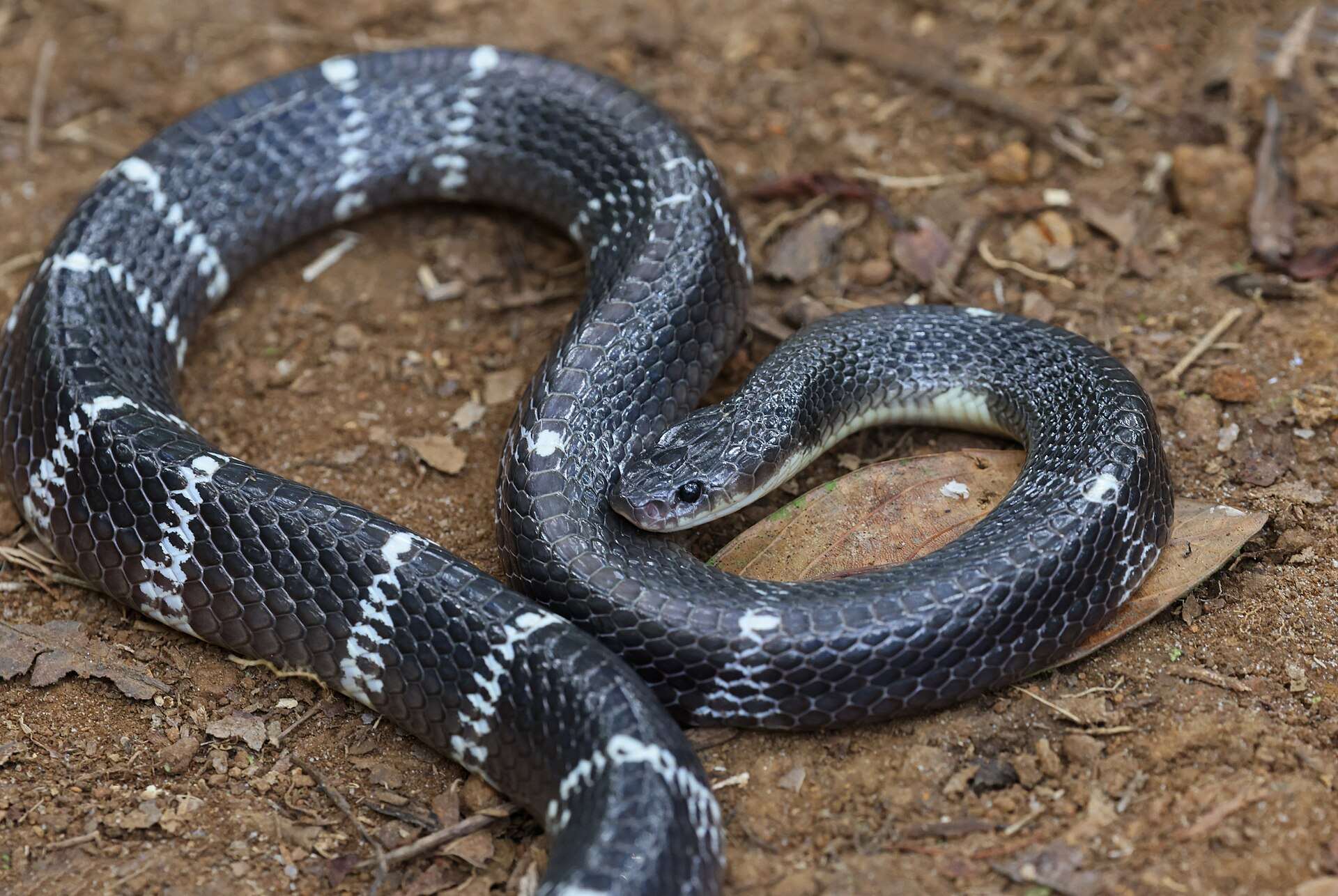
The common krait and the common wolf snake share homes across South Asia. Knowing the difference protects people and snakes. Pick a difference to see it on both.

Spot the difference
Common krait coiled on bare earth and dry leaves, showing thin white bands on a glossy black body
Medically significant

Common krait

Bungarus caeruleus

Bands
Thin white bands, often in pairs. They fade towards the head.
Colour
Glossy black or bluish-black, with a row of enlarged scales along the middle of the back.
Head
A dark head with a white upper lip.
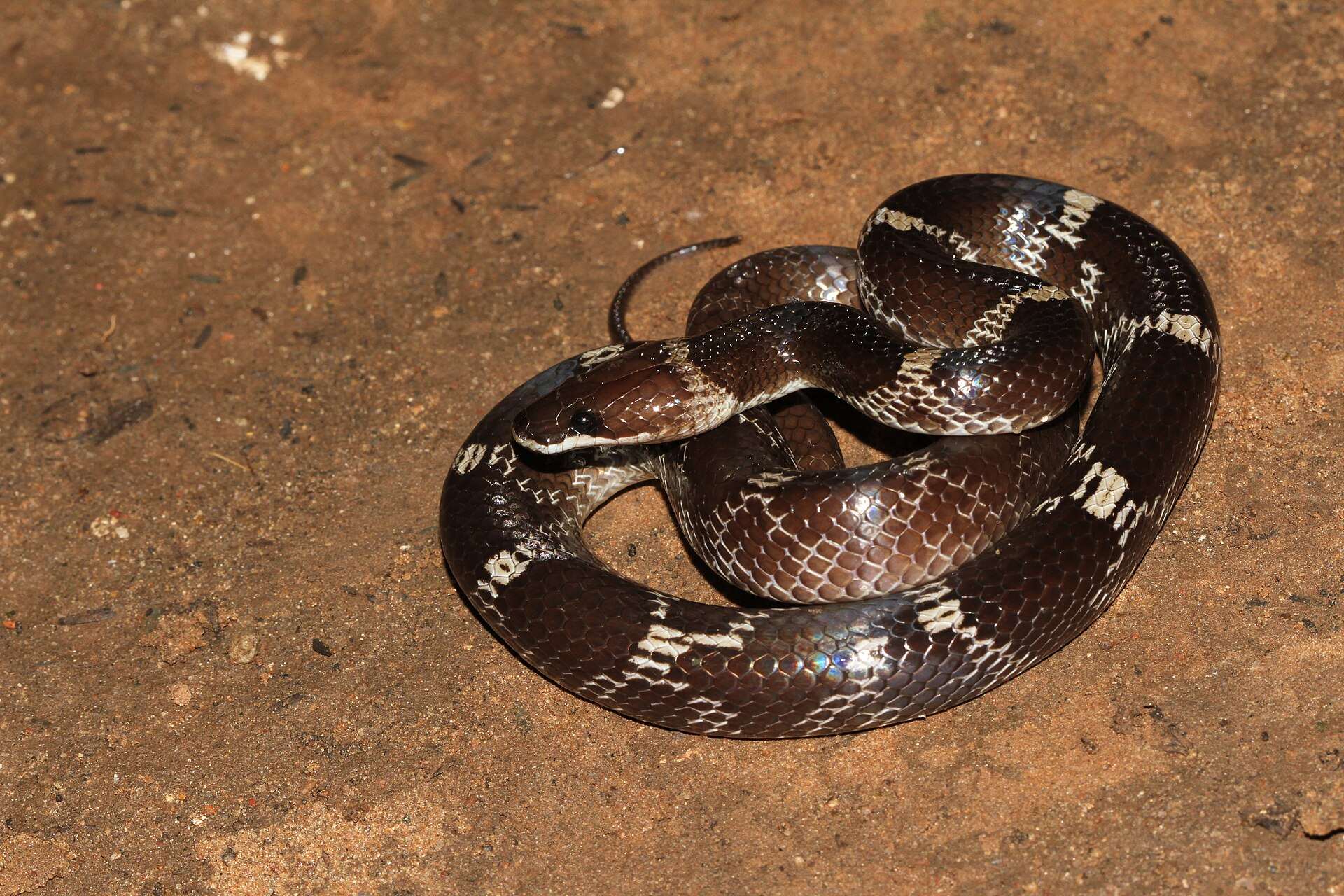
Common wolf snake coiled on reddish soil, showing a dark brown body with white crossbands that widen on the sides
Non-venomous

Common wolf snake

Lycodon aulicus

Bands
White bands that widen or fork on the sides.
Colour
Brown or greyish-brown.
Head
A pale patch behind the head, and a flattened snout that juts past the lower jaw.

Differences from Smith (1943), cited in both profiles. They help you learn the two apart; they are not a safe basis for handling any snake.

True size

How big is it really?

“Up to 5.5 m” is hard to picture. Pick a snake to see it at full length, to scale, next to an adult.

Common kraitMedically significant

1.5 m at most

About three quarters of the height of a 1.7 m adult.

Usual range 1.0–1.5 m, the bar on the ruler.

Pick a snake

Each snake is drawn at the longest length in its profile, on the same scale as the adult. Length is to scale; thickness is not.

Play

Snake, in daylight.

The classic game, calm and smooth. Every skin is a real species’ pattern, and every run ends with a fact.

How we work

Every fact has a source.

  • 555

    Sources cited

    Every paragraph links to a numbered reference, from The Reptile Database, IUCN, WHO and peer-reviewed research.

  • 57

    Photos credited

    Only openly licensed photos, each credited to its photographer with its licence.

  • Draft

    Honest review status

    Every page says plainly whether an expert has reviewed it yet. We never invent reviewers.

How we source facts

Try “krait”, “cobra” or Naja. Typos are fine.