
Hump-nosed viper
Hypnale hypnale (Merrem, 1820)
Also called Hump-nosed pit viper, Hump-nosed moccasin
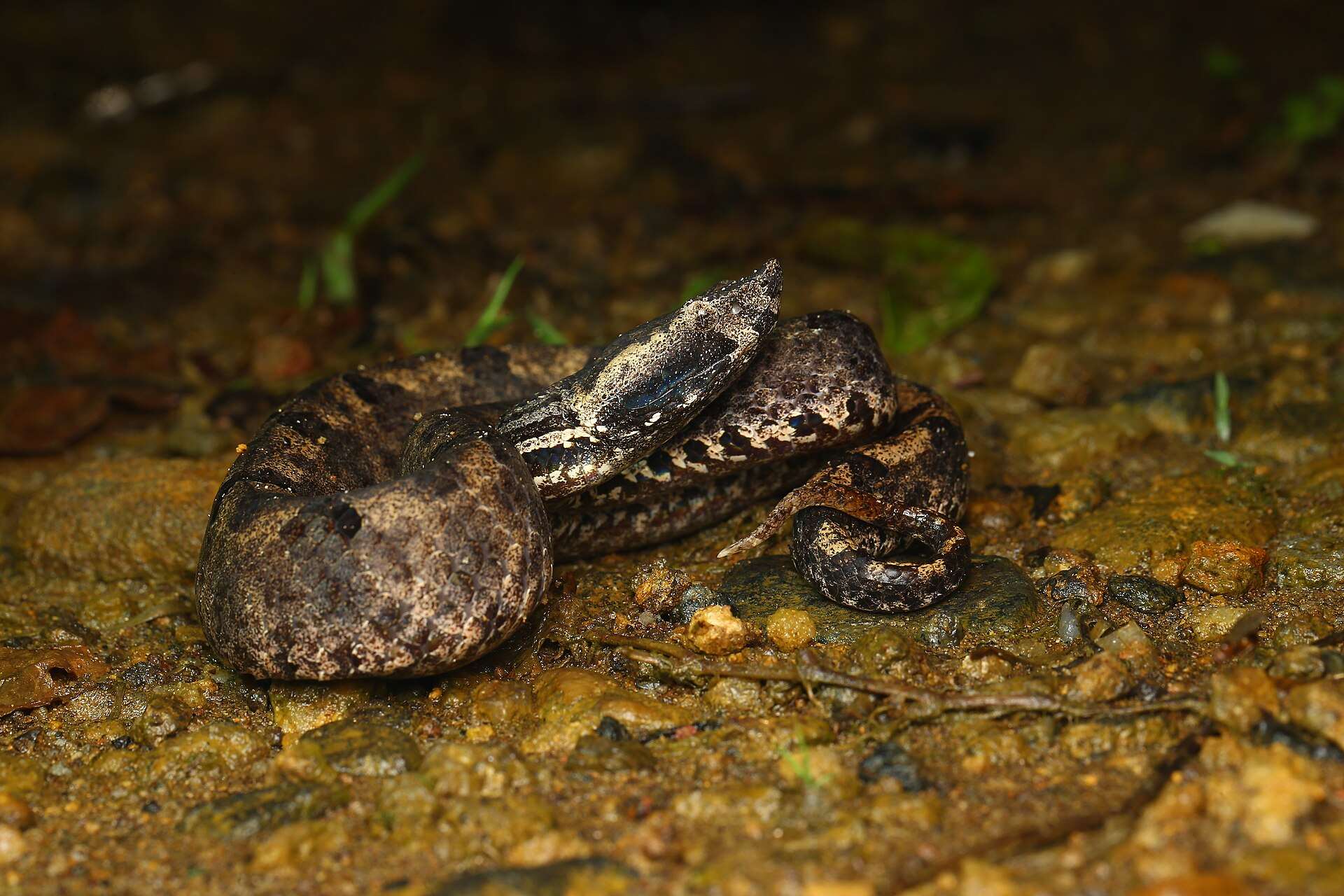
A small, stout, brown or grey pit viper with an upturned, pointed snout and rows of dark blotches. It lives in Sri Lanka and India's Western Ghats, where it is a common cause of snakebite.

Is it dangerous?
Yes. Its bite causes painful swelling and can lead to bleeding problems and kidney failure. Anyone bitten should go to hospital immediately.
Do not approach. If someone is bitten, go to a hospital now.
At a glance
- Length
- 0.48–0.6 m
- Active
- Day and night
- Found in
- Sri Lanka and south-western India
- Venom
- Haemotoxic and cytotoxic
- Young
- Live young
- Habitat
- Forest leaf litter, Plantations, Home gardens
- Diet
- Lizards, Frogs, Small mammals
Length shows a typical adult, then the largest recorded.
IUCN Red List status: Least Concern
Country guideSnakes of IndiaSnakes of Sri Lanka
True size
Hump-nosed viperMedically significant
0.6 m at most
About a third of the height of a 1.7 m adult.
Usual range 0.48–0.6 m, the bar on the ruler.
Saw-scaled viperMedically significant
0.76 m at most
About half the height of a 1.7 m adult.
Usual range 0.5–0.76 m, the bar on the ruler.
Malayan pit viperMedically significant
0.87 m at most
About half the height of a 1.7 m adult.
Usual range 0.7–0.87 m, the bar on the ruler.
Common wolf snakeNon-venomous
0.92 m at most
About half the height of a 1.7 m adult.
Usual range 0.7–0.92 m, the bar on the ruler.
Common kraitMedically significant
1.5 m at most
About three quarters of the height of a 1.7 m adult.
Usual range 1.0–1.5 m, the bar on the ruler.
Russell's viperMedically significant
1.68 m at most
About as long as a 1.7 m adult is tall.
Usual range 1.2–1.68 m, the bar on the ruler.
Indian cobraMedically significant
2.2 m at most
About 1.5 times the height of a 1.7 m adult.
Usual range 1.25–2.2 m, the bar on the ruler.
Indian rat snakeNon-venomous
3 m at most
About 2 times the height of a 1.7 m adult.
Usual range 1.8–3.0 m, the bar on the ruler.
Each snake is drawn at the longest length in its profile, on the same scale as the adult. Length is to scale; thickness is not.
Identification
The hump-nosed viper is a small, stout pit viper with a flat, triangular head that is broader than its neck7. Its snout is pointed and turned up at the end, which gives it a Sinhala name meaning “viper with an upturned lip”, and like other pit vipers it has a heat-sensing pit between the nostril and the eye3,4,5.
It is greyish or brownish above, heavily mottled, with a row of large dark spots on each side of the back and keeled body scales1,3. A dark stripe runs back from the eye with a pale one above it, and the tip of the tail is often yellowish or reddish3.
Smith (1943) gave total lengths of 33 cm for a male and 48 cm for a female3. A recent account describes it as a fairly small snake of less than 0.6 m7.
Distribution
The hump-nosed viper lives in Sri Lanka and in the Western Ghats of south-western India, in Kerala, Karnataka and Tamil Nadu1. In India it reaches north to about latitude 16° N, and it has been studied in the Western Ghats of Goa3,6.
A 2009 revision showed that two other hump-nosed vipers are found only in Sri Lanka: H. nepa in the central mountains and H. zara in the south-western lowlands2.
Habitat
It lives in evergreen, moist and dry deciduous forests and in human-modified areas such as plantations7. In Goa it was found mostly on the ground beneath leaf litter, in cane and bamboo thickets and in semi-evergreen and moist deciduous forest, from about 35 m to 670 m above sea level6. There it moved into neighbouring cashew plantations after the monsoon, and it seems to prefer cool, moist places6.
In Sri Lanka, people are usually bitten by this species in home gardens4.
Behaviour
The hump-nosed viper is well camouflaged, moves very little and hunts by ambush6. It is mostly terrestrial but sometimes climbs into low bushes and herbs3,6. It has been watched hunting at about 10 pm7. In one large Sri Lankan study most people were bitten at night near their homes, but another found that most bites happened during the day4.
In Goa it was most abundant during the monsoon6.
Diet
It eats small mammals such as rodents, lizards including geckos and skinks, and frogs7. In Karnataka, one was seen ambushing a skink at night; the skink died within about 40 seconds of the bite7.
Young hump-nosed vipers wriggle their pale tail tips like worms to lure lizards within striking range3,7.
Reproduction
The hump-nosed viper gives birth to live young1,3. A litter contains about four to ten young3.
Venom and medical significance
The hump-nosed viper was long thought to cause only local effects, but it is now known to cause serious systemic poisoning and occasional deaths4. Pain and swelling occur in about 90% of envenomed people and can lead to blistering and tissue death, and some develop blood-clotting problems or acute kidney injury that can become long-term kidney disease4.
In a ten-hospital study in Sri Lanka, it caused 35% of bites by identified snakes, and 1.7% of those bitten died, all from kidney failure4. The World Health Organization places it in its highest category of medical importance in Sri Lanka and south-western India5.
The polyvalent antivenoms made in India are raised against the “big four” snakes and do not cover this species, and in Sri Lanka the available polyvalent antivenom has proved ineffective against its bites and often causes reactions4,5. Anyone bitten should go to hospital immediately.
Conservation
The hump-nosed viper is listed as Least Concern on the IUCN Red List (2021 assessment)8. It was the most abundant of three pit vipers counted in a survey of Goa’s wildlife sanctuaries6. In India it is protected under Schedule II of the Wild Life (Protection) Act, which covers all vipers not listed in Schedule I9.
Similar species
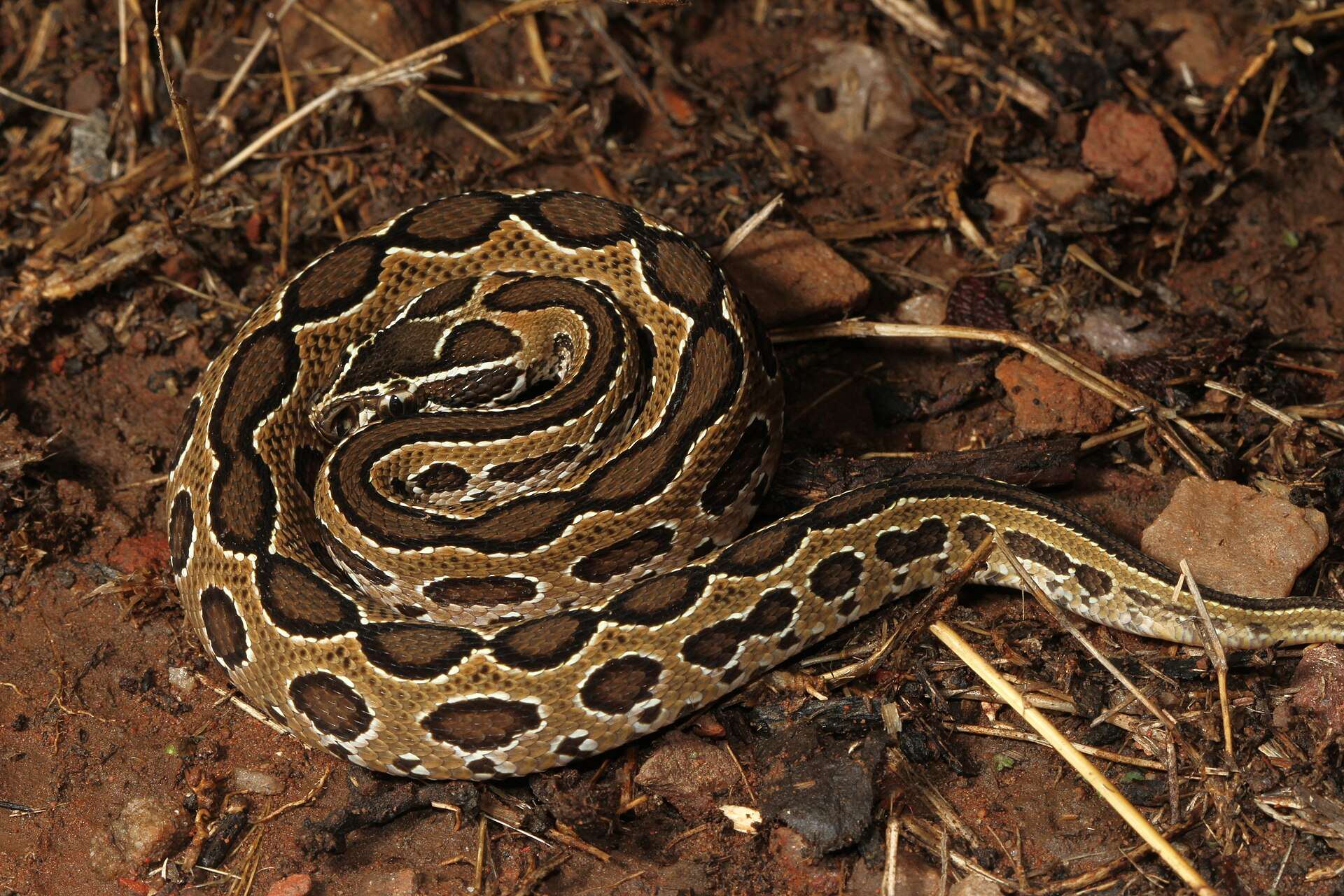
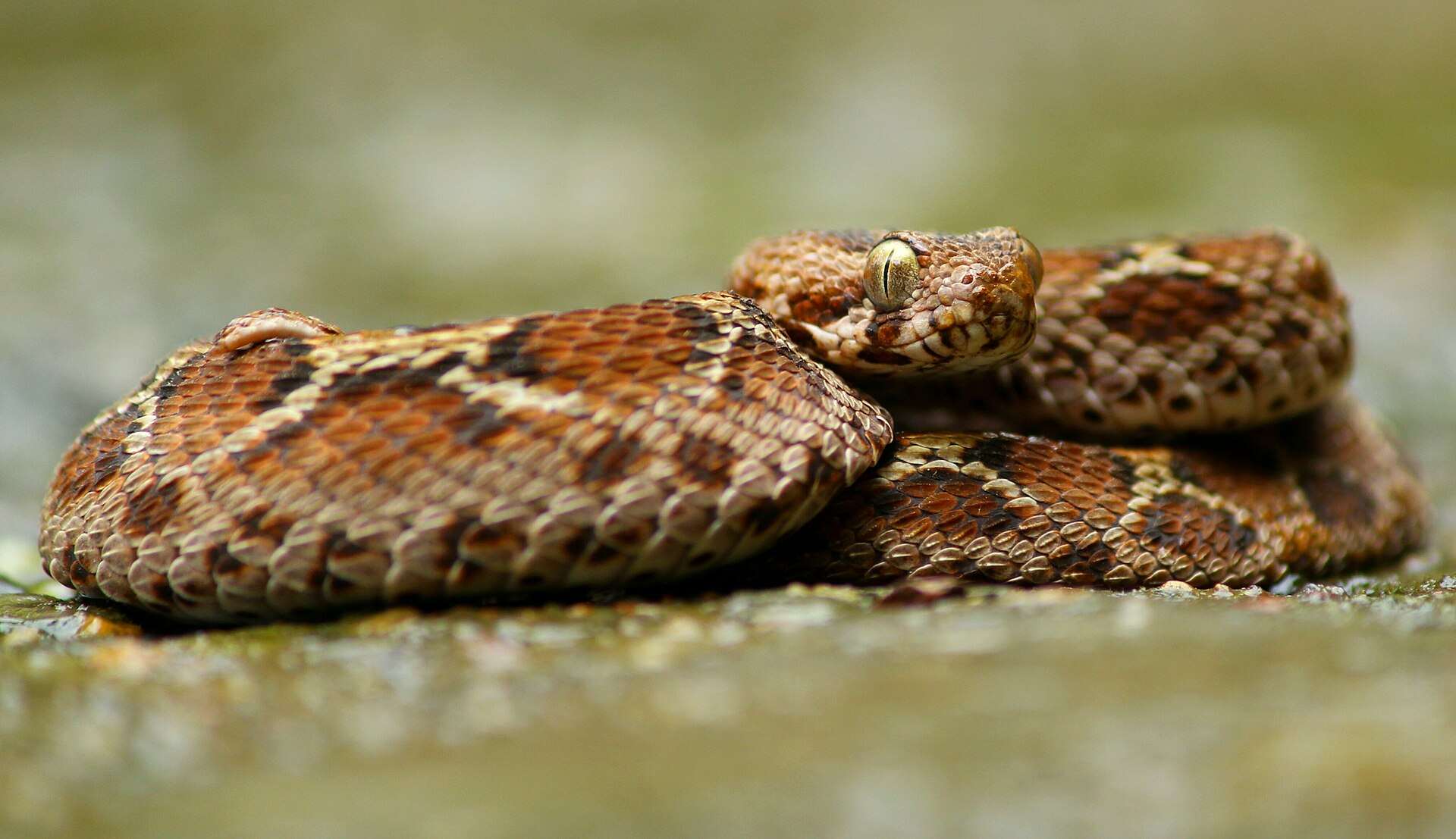
Its bites have been mistaken for those of the saw-scaled viper (Echis carinatus) in south-western India and of Russell’s viper (Daboia russelii) in Sri Lanka, leading to unnecessary antivenom treatment5. Both of those are true vipers without the heat-sensing pit between the nostril and the eye that the hump-nosed viper has5. Russell’s viper also has rows of large, dark-rimmed spots along its body5.
In Sri Lanka, H. nepa has a wart-like bump at the tip of its snout, and H. zara has a distinctly raised snout tip1. These differences are not a safe basis for handling any snake. Keep your distance from every snake you cannot identify.
In captivity
The hump-nosed viper is a venomous snake whose bite can cause kidney failure, and it is not suitable as a pet4. In India it is protected under Schedule II of the Wild Life (Protection) Act, as amended in 20229. It should never be caught or kept by private individuals.
Look-alikes
Don’t confuse it with…
These snakes are often mistaken for each other. Use the differences to learn, never as a reason to handle a snake.
References
- 1
Uetz, P. et al. (eds.) (2026). Hypnale hypnale (Merrem, 1820). The Reptile Database. reptile-database.reptarium.cz
- 2
Maduwage, K., Silva, A., Manamendra-Arachchi, K. & Pethiyagoda, R. (2009). A taxonomic revision of the South Asian hump-nosed pit vipers (Squamata: Viperidae: Hypnale). Zootaxa 2232: 1–28. doi.org
- 3
Smith, M.A. (1943). The Fauna of British India, Ceylon and Burma. Reptilia and Amphibia. Vol. III, Serpentes. Taylor and Francis, London. (Asiatic pit vipers, p. 494; Ancistrodon hypnale, pp. 499–500.) archive.org
- 4
Shivanthan, M.C., Yudhishdran, J., Navinan, R. & Rajapakse, S. (2014). Hump-nosed viper bite: an important but under-recognized cause of systemic envenoming. Journal of Venomous Animals and Toxins including Tropical Diseases 20: 24. doi.org
- 5
World Health Organization, Regional Office for South-East Asia (2016). Guidelines for the management of snakebites, 2nd edition. WHO SEARO, New Delhi. who.int
- 6
Sawant, N.S., Jadhav, T.D. & Shyama, S.K. (2010). Distribution and abundance of pit vipers (Reptilia: Viperidae) along the Western Ghats of Goa, India. Journal of Threatened Taxa 2(10): 1199–1204. doi.org
- 7
Rana, N., Shivapushanam, K., Frank, S.J.D. & Gopi, G.V. (2026). Hump-nosed Pit Viper Hypnale hypnale feeding on an Allapalli Skink Eutropis allapallensis in Karwar, India. Journal of Threatened Taxa 18(2): 28433–28435. doi.org
- 8
Kannishka, S., Ukuwela, K., Kandambi, D. & Pushpamal, V. (2021). Hypnale hypnale. The IUCN Red List of Threatened Species 2021: e.T172712A1372897. iucnredlist.org
- 9
Government of India (2022). The Wild Life (Protection) Amendment Act, 2022 (No. 18 of 2022), Schedule II, Part C: Reptiles (all Viperidae not listed in Schedule I). prsindia.org
Play
Play as the hump-nosed viper.
Its real pattern is a skin in Snake. Every run ends with a fact.