Country guide

Snakes of Nepal

Snakebite kills more than 2,000 people a year in Nepal's southern Terai lowlands, where a 2018–19 survey found that 7.8% of people bitten died, with children and females over-represented among the deaths. Most serious bites are caused by four kraits, the Indian and monocled cobras and Russell's viper, and treatment relies mainly on an Indian polyvalent antivenom made from Indian snake venoms.

> 26,000

people bitten by snakes a year in the Terai lowlands1

> 2,300

snakebite deaths a year in the Terai lowlands1

162 per 100,000

snakebite deaths a year in one eastern Terai area2

If someone is bitten

Call now. Then go to hospital.

Antivenom is given in hospitals. Don’t wait for symptoms.

  • Australia

    Australian first aid for snakebite uses a pressure immobilisation bandage and splint, and advises not washing the bite.

  • Bangladesh

    A 2017 study noted that the Indian polyvalent antivenom used in Bangladesh is not made from the venoms of local species such as the monocled cobra, and it did not prevent local tissue damage from cobra bites.

  • Brazil

    Antivenom is free in Brazil's public health system (SUS), but it is only given in hospital, at reference hospitals chosen by each state.

  • India

    Indian polyvalent antivenom is raised against the 'Big Four' and may not neutralise some regional species, such as the monocellate cobra in the North-East and the hump-nosed pit viper in the south-west.

  • Indonesia

    Indonesia's own antivenom, made by Bio Farma, is raised against only three species (Javan spitting cobra, banded krait and Malayan pit viper), so it may work poorly for bites by other snakes such as green pit vipers.

  • Kenya

    Antivenom is usually stocked only at hospitals and some health centres, so people bitten in rural areas often need to be referred, and delays are common.

  • Mexico

    Mexico's public health system uses two anti-viper antivenoms; one is made from the venoms of the terciopelo and the Mexican west coast rattlesnake.

  • Nepal

    100 is the police emergency number; call 102 for an ambulance.

  • Nigeria

    Antivenoms made from Nigerian snake venoms (EchiTAb G and EchiTAb-Plus-ICP) have proved effective in clinical trials, while some imported antivenoms made from non-African snake venoms have proved ineffective.

  • Pakistan

    Rescue 1122 handles ambulance and fire emergencies; the police number is 15.

  • Philippines

    The only antivenom made in the Philippines is Philippine Cobra Antivenom, raised against the Philippine cobra; there is no locally made antivenom for pit viper bites.

  • South Africa

    112 works for all emergencies from a mobile phone; 10177 is ambulance and fire, and 10111 is police.

  • Sri Lanka

    119 (or 118) is the police emergency number; call 1990 for an ambulance.

  • United States

    For free, expert 24/7 advice you can also call Poison Help on 1-800-222-1222, but call 911 in an emergency.

Not listed? Call your local emergency number.

Look-alikes

Dangerous or harmless?

Harmless snakes are often killed because they look like dangerous ones. Learn the differences, and still never handle a snake.

Spot the difference
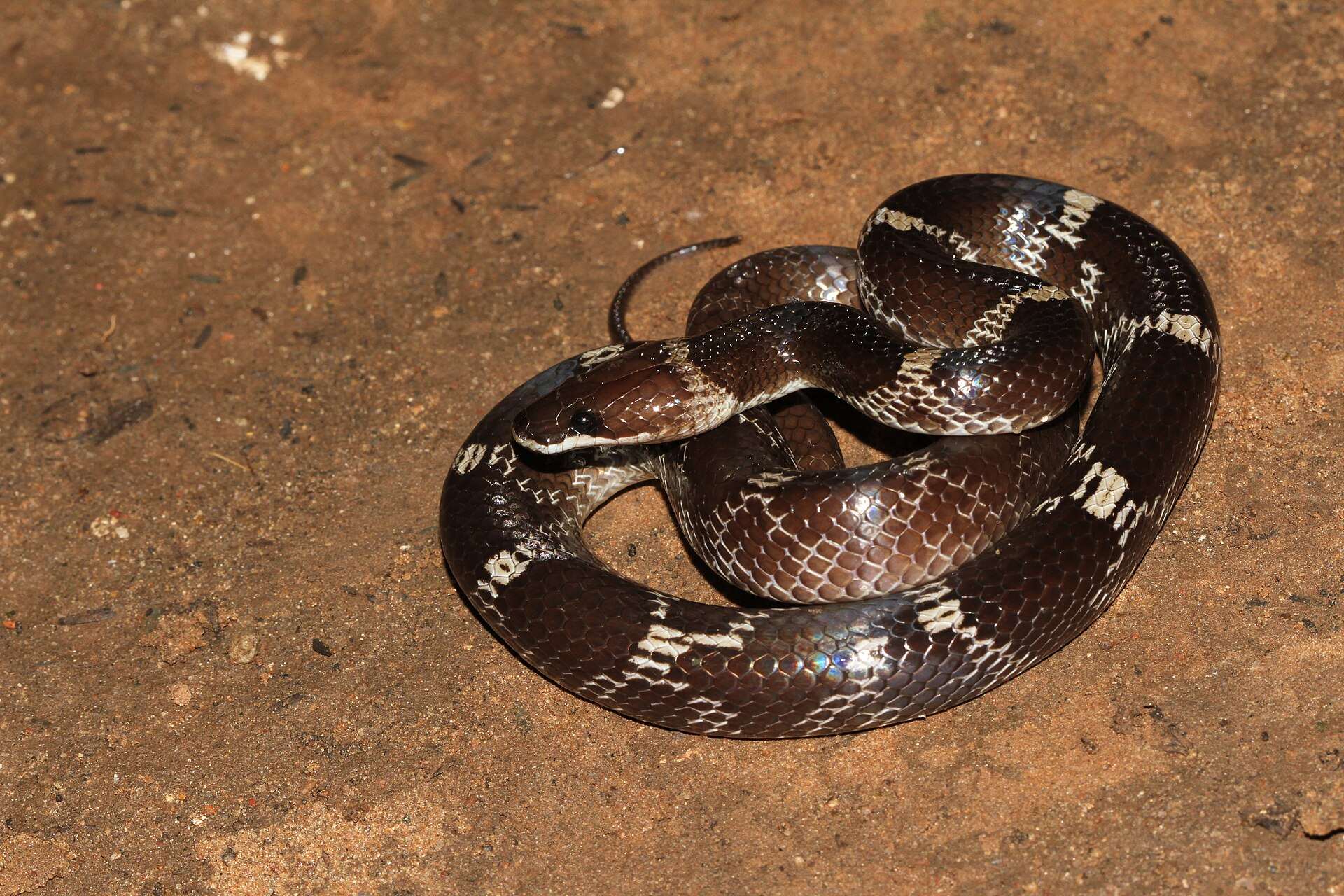
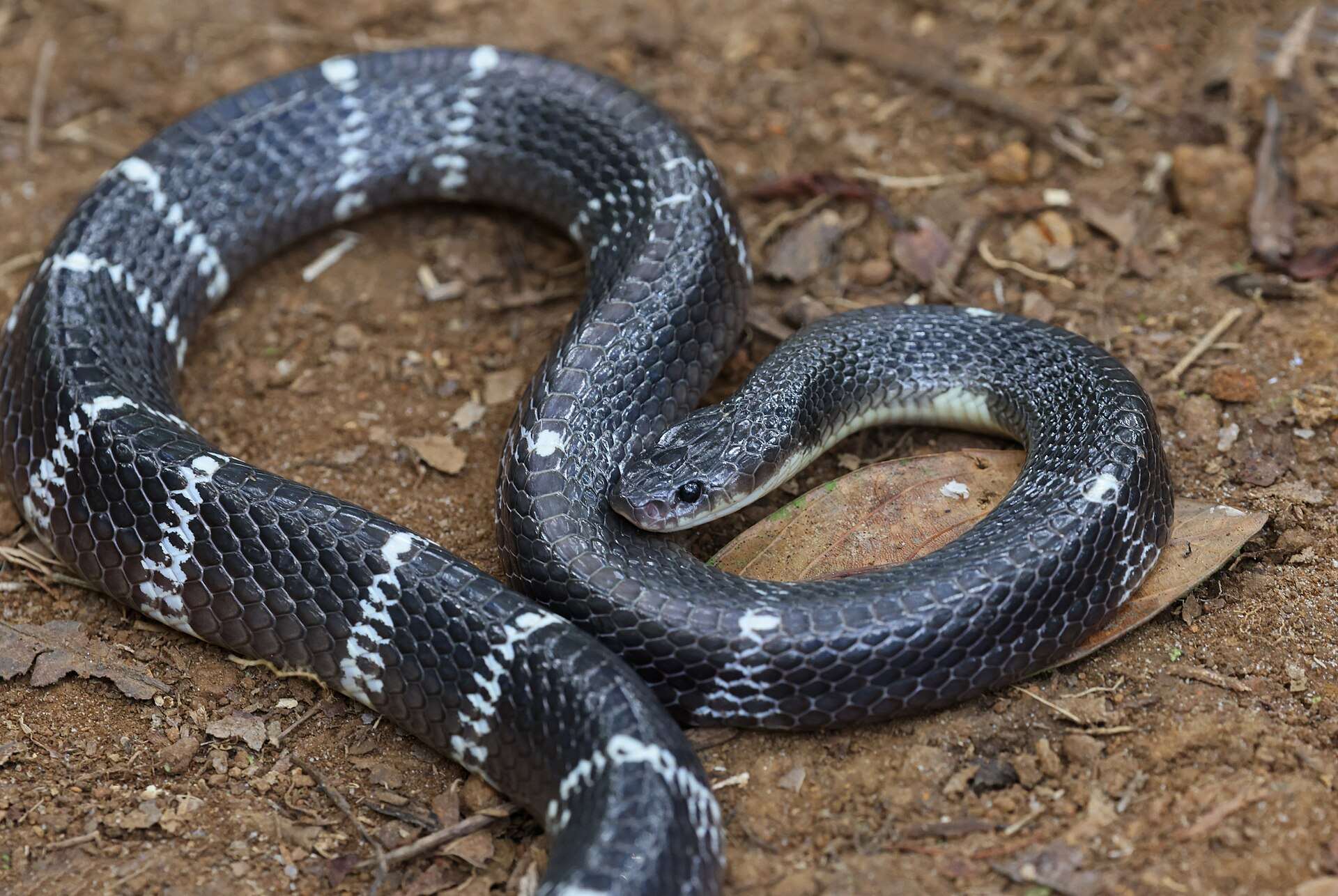
Common krait coiled on bare earth and dry leaves, showing thin white bands on a glossy black body
Medically significant

Common krait

Bungarus caeruleus

Bands
Thin white bands, often in pairs. They fade towards the head.
Colour
Glossy black or bluish-black, with a row of enlarged scales along the middle of the back.
Head
A dark head with a white upper lip.
Common wolf snake coiled on reddish soil, showing a dark brown body with white crossbands that widen on the sides
Non-venomous

Common wolf snake

Lycodon aulicus

Bands
White bands that widen or fork on the sides.
Colour
Brown or greyish-brown.
Head
A pale patch behind the head, and a flattened snout that juts past the lower jaw.

Differences from Smith (1943), cited in both profiles. They help you learn the two apart; they are not a safe basis for handling any snake.

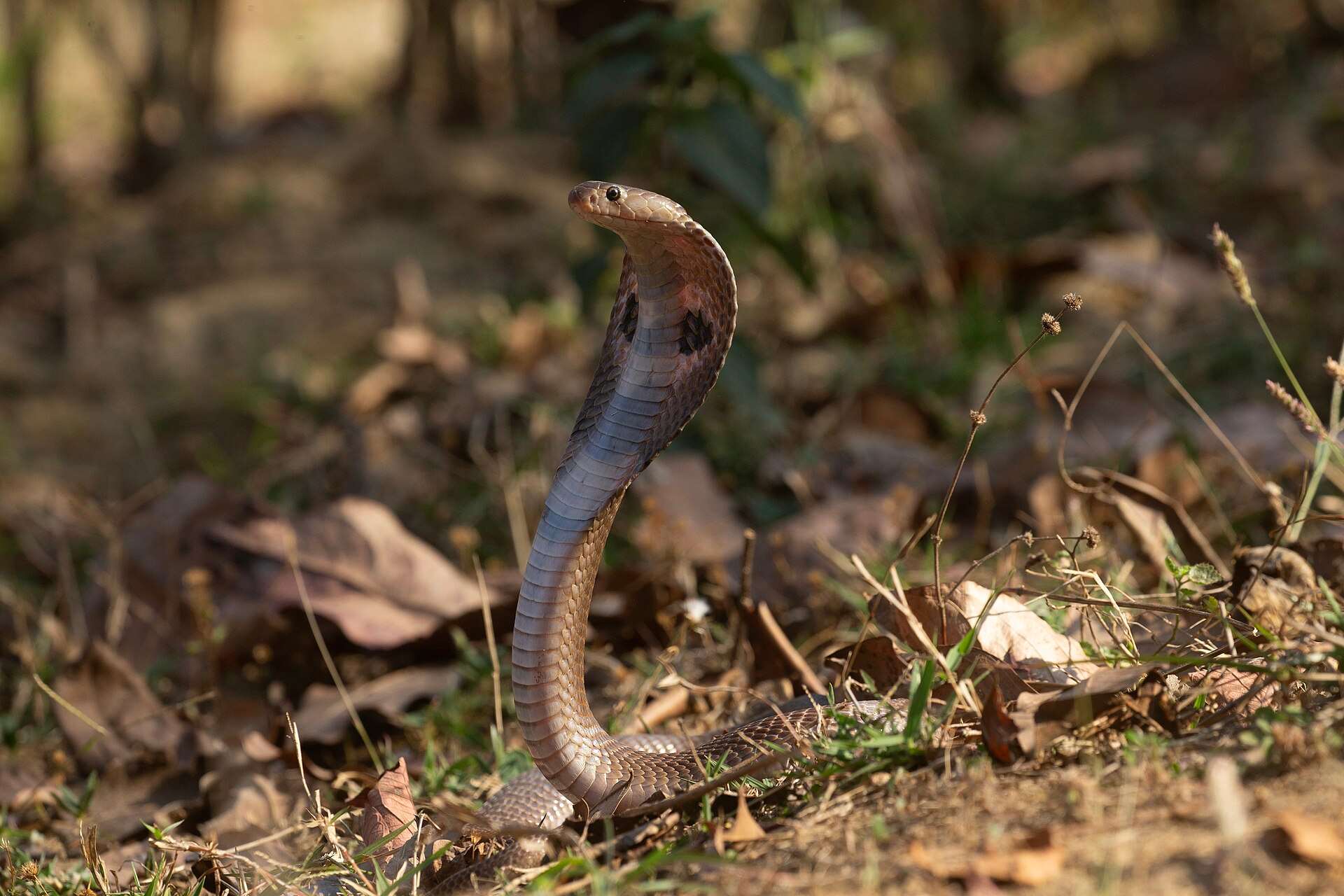
Brown Indian cobra rearing up among dry leaves and grass, its hood spread and dark throat spots visible
Medically significant

Indian cobra

Naja naja

The classic hooded cobra of South Asia. Its colour ranges from grey and brown to black, and its hood often, but not always, carries a spectacle-shaped mark. It is common around farms and villages.

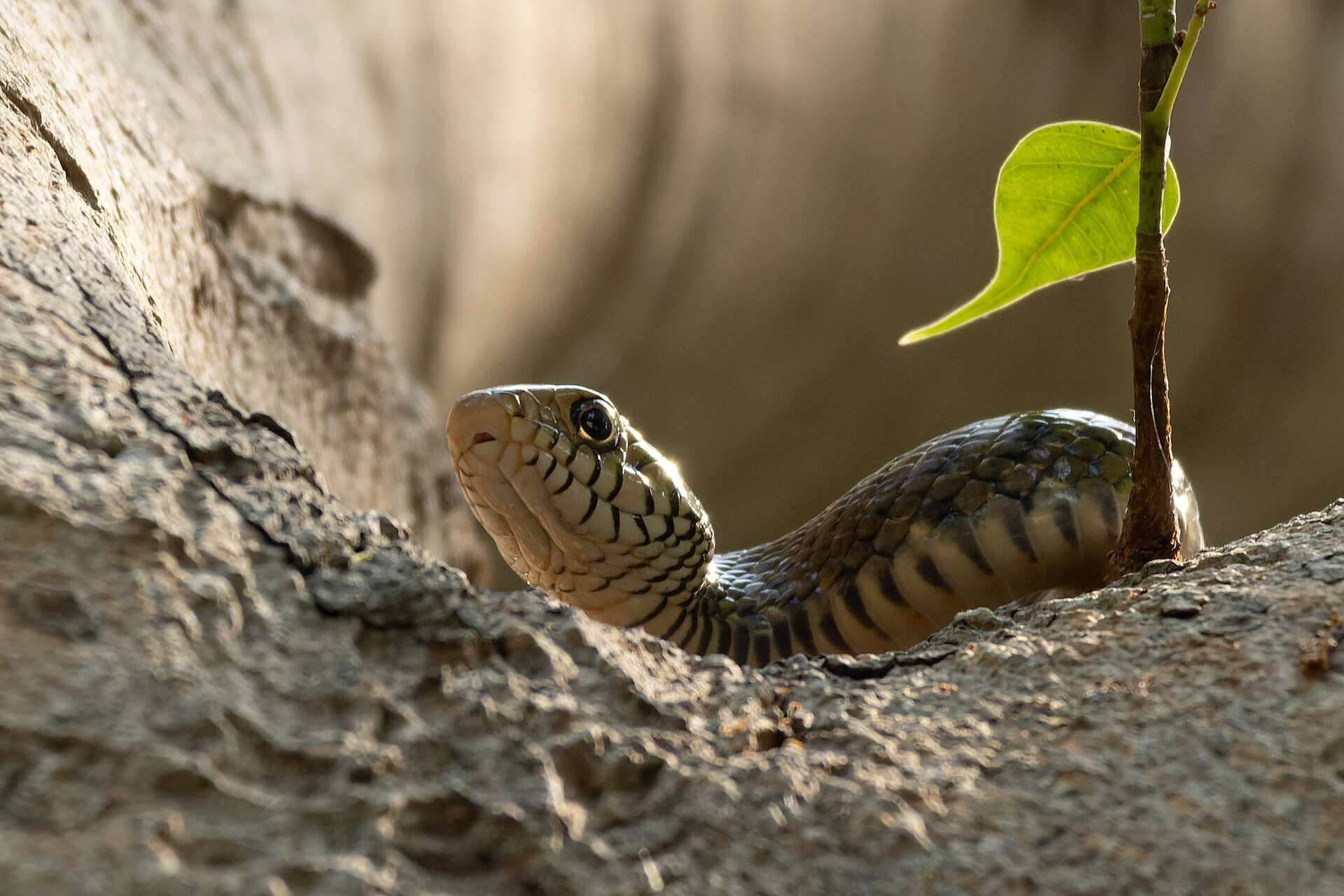
Indian rat snake resting on a tree branch, showing its large eye, black-edged lip scales and dark bands on the body
Non-venomous

Indian rat snake

Ptyas mucosa

A long, slender, non-venomous daytime snake common across southern Asia. It is often seen near farms and villages hunting rats, and is frequently mistaken for a cobra.

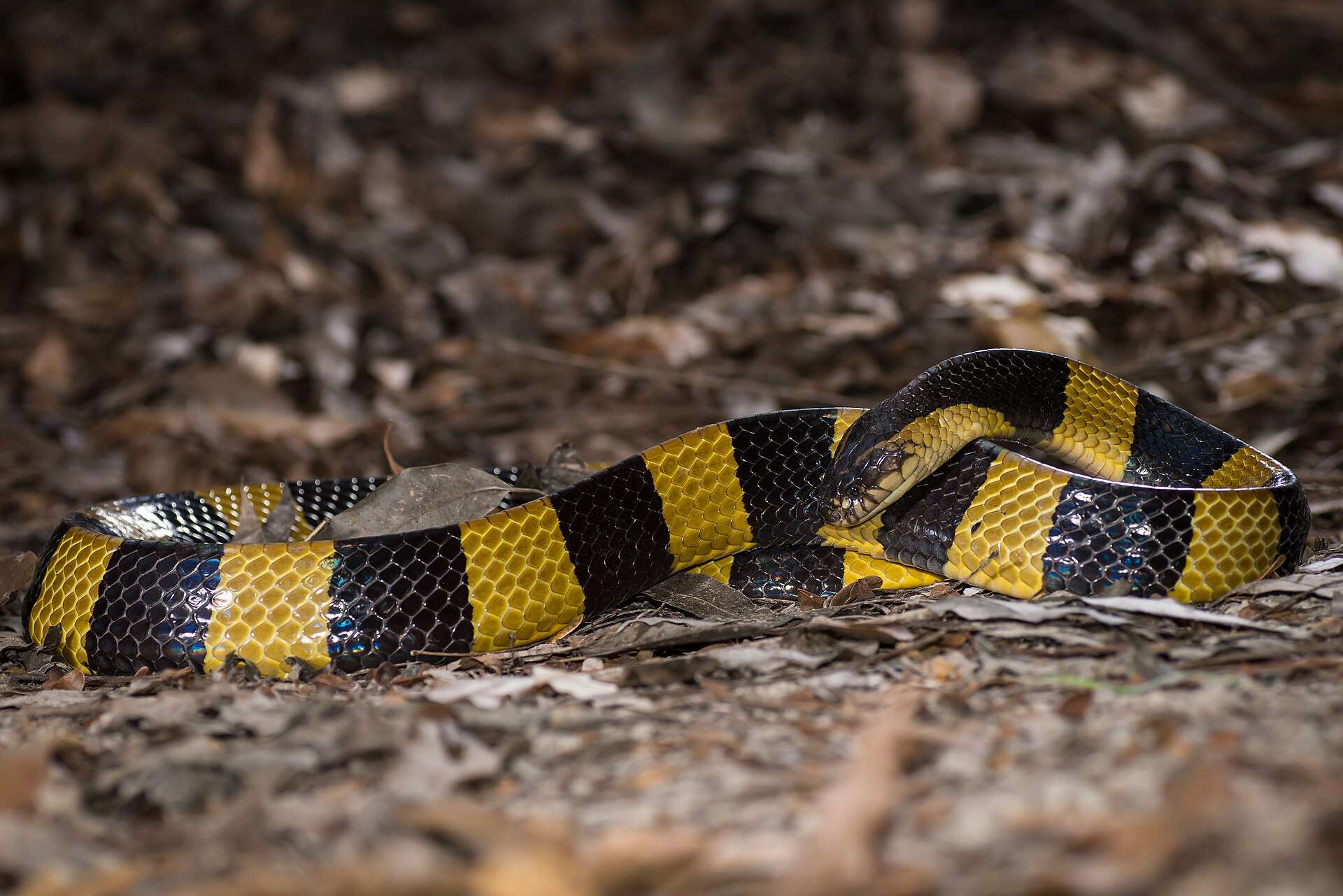
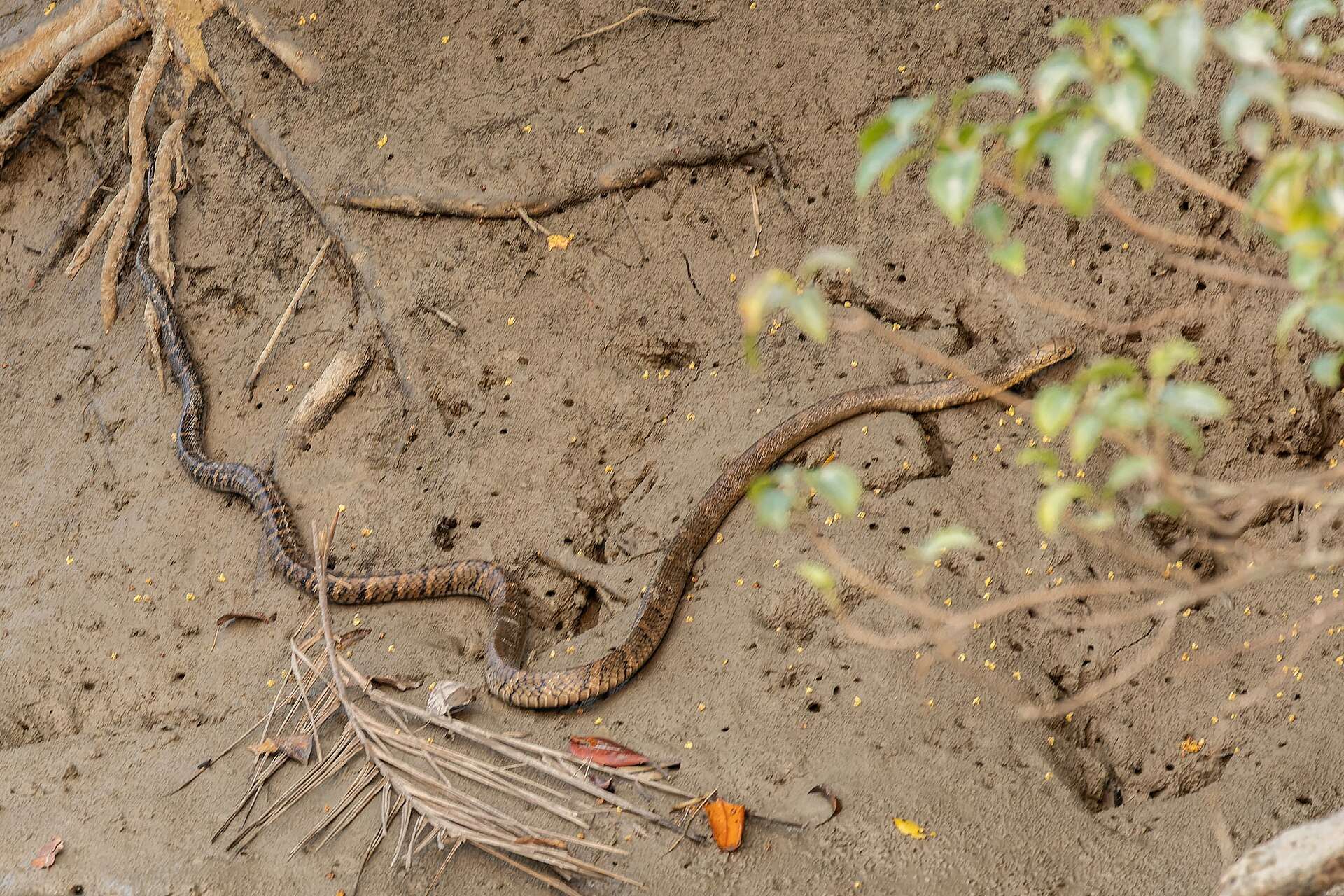
Banded king cobra stretched across a muddy mangrove creek bank in the Sundarbans, West Bengal, India
Medically significant

King cobra

Ophiophagus hannah

The world's longest venomous snake, a banded forest-dweller that feeds mainly on other snakes. Since 2024 the name covers only the northern king cobra, from eastern India and the Himalayan foothills to Indochina.

Indian rat snake resting on a tree branch, showing its large eye, black-edged lip scales and dark bands on the body
Non-venomous

Indian rat snake

Ptyas mucosa

A long, slender, non-venomous daytime snake common across southern Asia. It is often seen near farms and villages hunting rats, and is frequently mistaken for a cobra.

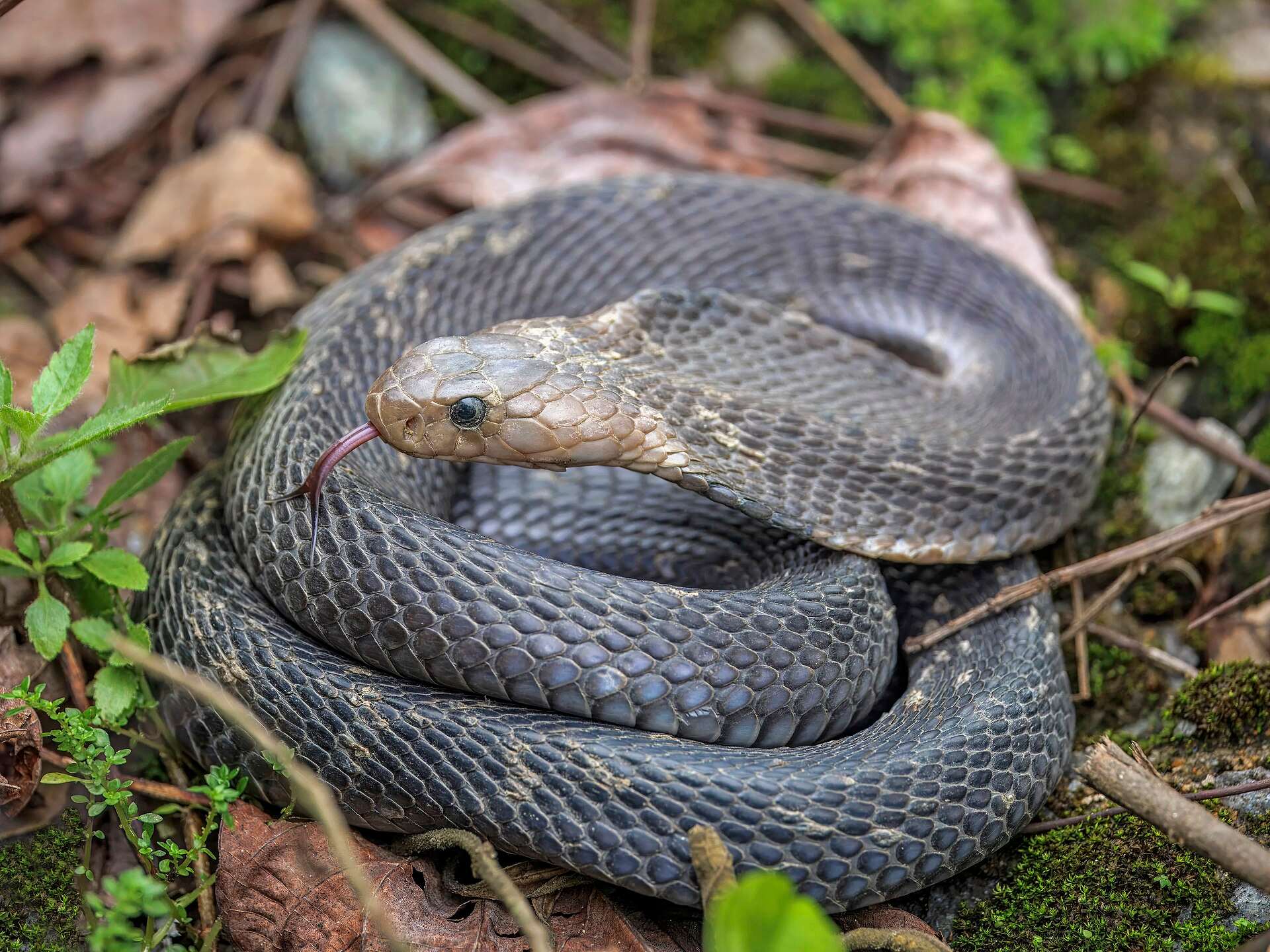
Dark grey monocled cobra coiled on moss and dead leaves in Bach Ma National Park, Vietnam, with its paler brown head raised and tongue out
Medically significant

Monocled cobra

Naja kaouthia

A hooded cobra of eastern South Asia and South-East Asia, brown, grey or blackish, with a single pale ring on the back of its hood. It is common in rice fields and a major cause of snakebite.

Indian rat snake resting on a tree branch, showing its large eye, black-edged lip scales and dark bands on the body
Non-venomous

Indian rat snake

Ptyas mucosa

A long, slender, non-venomous daytime snake common across southern Asia. It is often seen near farms and villages hunting rats, and is frequently mistaken for a cobra.

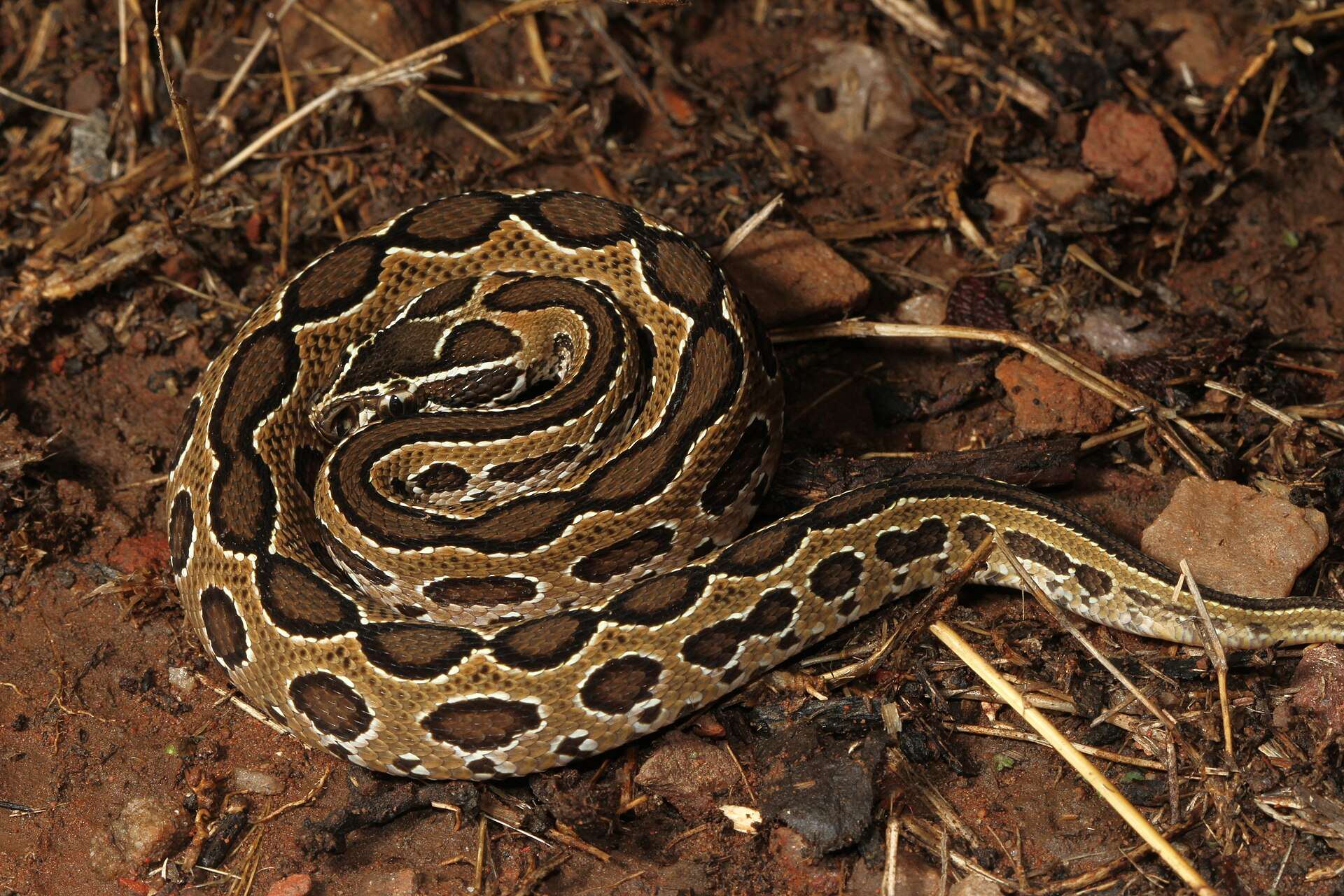
Russell's viper coiled on reddish soil and dry twigs, showing rows of large dark-brown spots edged in black and white
Medically significant

Russell's viper

Daboia russelii

A thick-bodied, brown viper of open country in South Asia, marked with three rows of dark, ringed spots. It is one of the region's most important causes of serious snakebite.

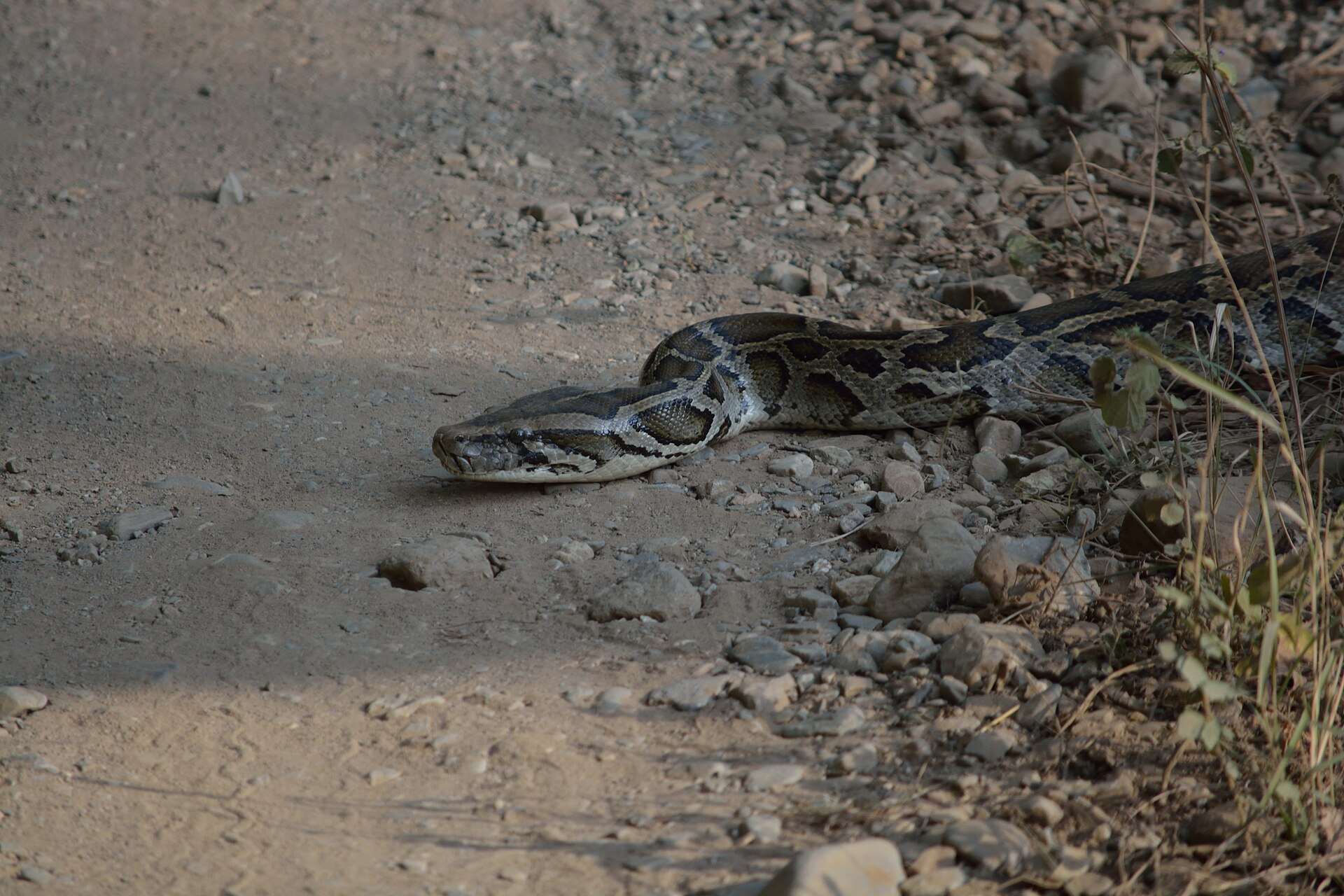
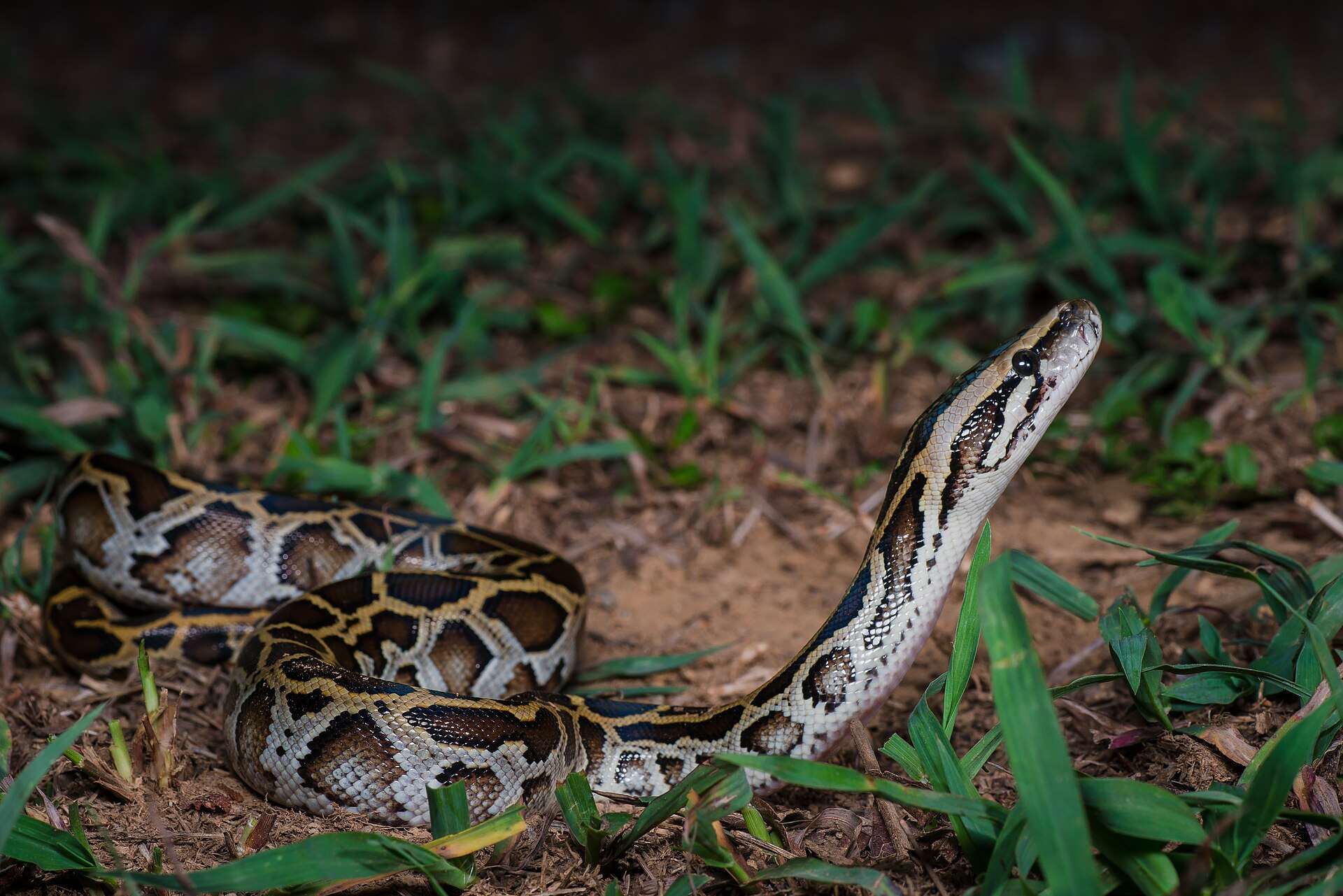
Indian rock python stretched across a stony dirt track in Jim Corbett National Park, showing its patterned head and blotched body
Non-venomous

Indian rock python

Python molurus

A large, heavy-bodied constrictor of South Asia, pale grey to yellowish with big dark-edged blotches. It is not venomous and kills its prey by squeezing.

Every species

All 70 snake species recorded in Nepal

10 have a full profile so far. The others are listed by family, without a venom status until they have a sourced profile.

Colubridae42
  • Ahaetulla laudankiaLaudankia vine snake
  • Anguiculus rappiiHimalayan stripe-necked snake
  • Atretium schistosumOlive keelback wart snake
  • Boiga forsteniForsten's Cat Snake
  • Boiga multifasciataMany-banded Tree Snake
  • Boiga nuchalisCollared Catsnake
  • Boiga siamensisGray Cat Snake
  • Boiga stoliczkaeTawny Cat Snake
  • Boiga trigonataCommon Cat Snake
  • Boiga westermanniIndian Egg-eating Snake
  • Chrysopelea ornataGolden Flying Snake
  • Coelognathus helenaTrinket Snake
  • Dendrelaphis tristisCommon Indian Bronze-back
  • Elaphe cantorisEastern Trinket Snake
  • Elaphe hodgsoniiEnglish common name not available
  • Fowlea piscatorCheckered Keelback
  • Fowlea sanctijohannisSt. John's Keelback
  • Fowlea schnurrenbergeriBar-necked Keelback
  • Gongylosoma calamariaCalamaria Reed Snake
  • Hebius clerkiYunnan Keelback
  • Hebius parallelusYunnan Keelback
  • Herpetoreas platycepsHimalayan Keelback
  • Herpetoreas sieboldiiSiebold’s Keelback
  • Lycodon aulicusCommon Wolf Snake
  • Lycodon jaraTwin-spotted Wolf Snake
  • Lycodon striatusBarred Wolf Snake
  • Oligodon albocinctusLight-barred Kukri Snake
  • Oligodon cyclurusCantor's Kukri Snake
  • Oligodon russelius
  • Oligodon violaceusCoral red kukri snake
  • Platyceps pliniiBanded Racer
  • Pseudoxenodon macrops(Large-eyed or) Big-eyed Bamboo Snake
  • Ptyas nigromarginataBlack-bordered Rat Snake
  • Rhabdophis helleriHeller’s Red-necked Keelback
  • Sibynophis collarisCommon Many-tooth Snake
  • Sibynophis sagittariusCantor’s black-headed snake
  • Spalerosophis atricepsRoyal Snake
  • Trachischium fuscumBlackbelly Worm-eating Snake
  • Trachischium guentheriRosebelly Worm-eating Snake
  • Trachischium laeveOlive Oriental Slender Snake
  • Trachischium tenuicepsYellowbelly Worm-eating Snake
  • Xenochrophis cerasogasterPainted Keelback
Viperidae10
  • Daboia russeliiRussell’s Viper
  • Gloydius nepalensisNepali Pitviper
  • Ovophis monticola
  • Protobothrops himalayanus
  • Protobothrops jerdonii
  • Trimeresurus albolabrisWhite-lipped Tree Viper
  • Trimeresurus erythrurusRedtail (bamboo) Pit Viper
  • Trimeresurus popeiorumPope's Bamboo Pit Viper
  • Trimeresurus septentrionalisHimalayan White-lipped Pitviper
  • Trimeresurus tibetanusTibetan Pit Viper
Elapidae9
  • Bungarus bungaroidesNortheastern Hill Krait
  • Bungarus caeruleusCommon krait
  • Bungarus lividusLesser Black Krait
  • Bungarus nigerGreater Black Krait
  • Bungarus walliSind Krait
  • Naja najaSpectacled cobra
  • Ophiophagus hannahKing Cobra
  • Sinomicrurus goreiGore’s coral snake
  • Sinomicrurus macclellandiMacClelland’s Coral Snake
Typhlopidae3
  • Argyrophis diardiiDiard’s blindsnake
  • Indotyphlops jerdoniJerdon's Worm Snake
  • Pseudoindotyphlops porrectusSlender Worm Snake
Pythonidae2
Boidae1
  • Eryx conicusCommon Sand Boa
Homalopsidae1
  • Ferania sieboldiiSiebold’s Mud Snake
Pareidae1
  • Pareas monticolaCommon Slug Snake
Psammophiidae1
  • Psammophis condanarusSand Snake

Source: Uetz, P. et al. (eds.), The Reptile Database, version 2026-06, via the Catalogue of Life (COL26.9). CC BY 4.0. Ranges in the source can be incomplete.

References

  1. 1

    Alcoba G, Sharma SK, Bolon I, et al. Snakebite epidemiology in humans and domestic animals across the Terai region in Nepal: a multicluster random survey. Lancet Glob Health. 2022;10(3):e398–e408. doi.org

  2. 2

    Shrestha BR, Pandey DP, Acharya KP, Thapa-Magar C, Mohamed F, Isbister GK. Effective, polyvalent, affordable antivenom needed to treat snakebite in Nepal. Bull World Health Organ. 2017;95(10):718–719. doi.org

Try “krait”, “cobra” or Naja. Typos are fine.