Country guide

Snakes of Sri Lanka

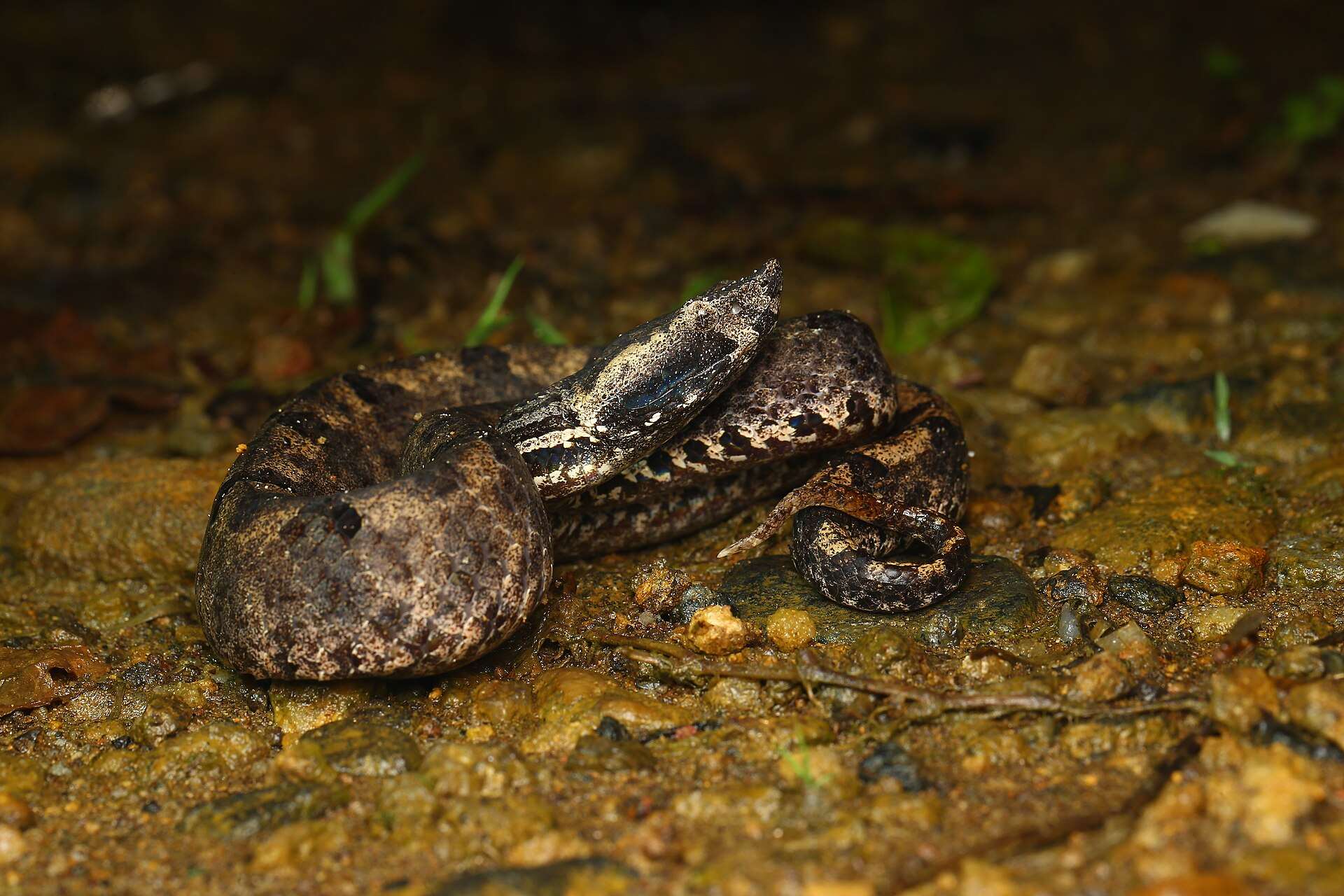
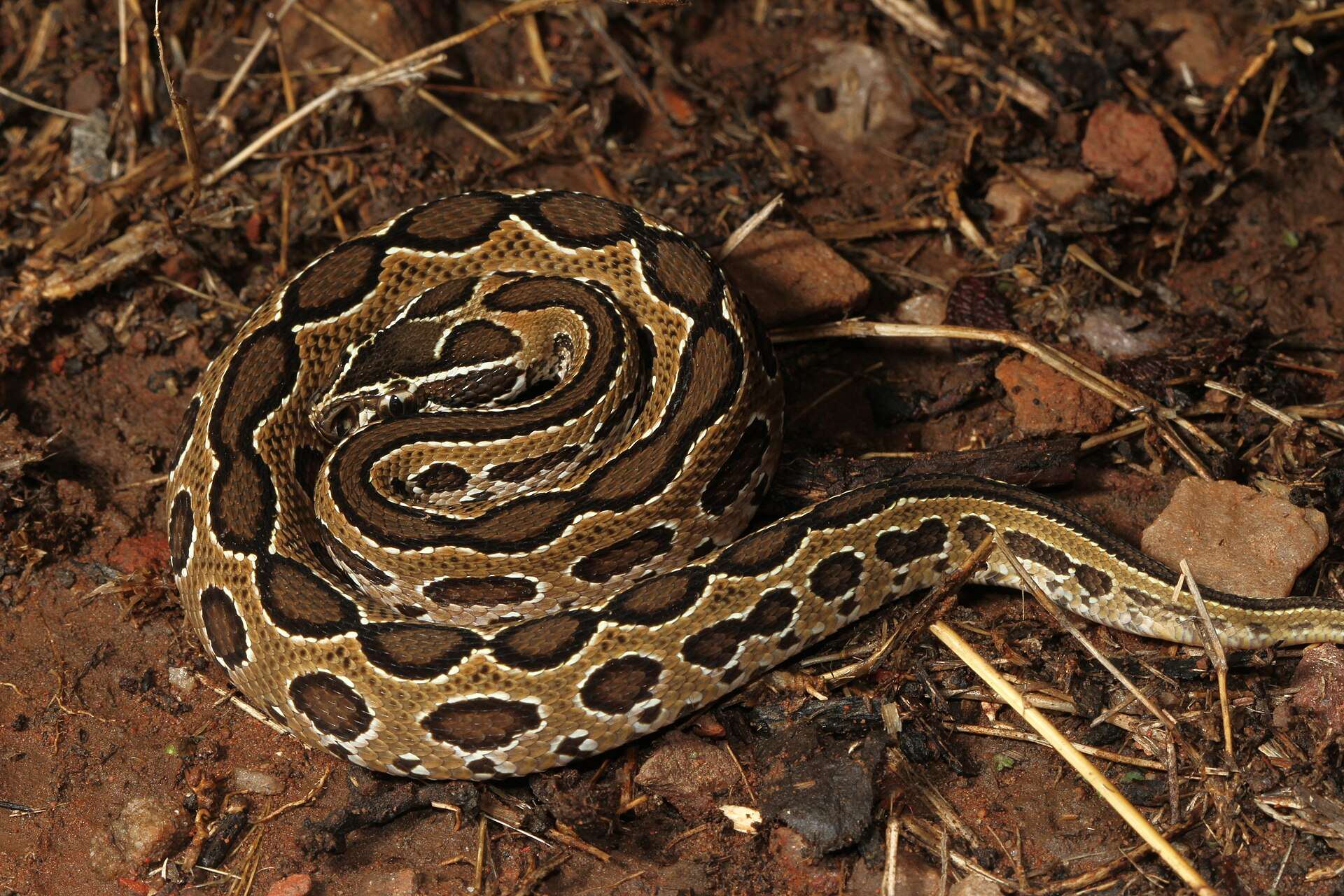
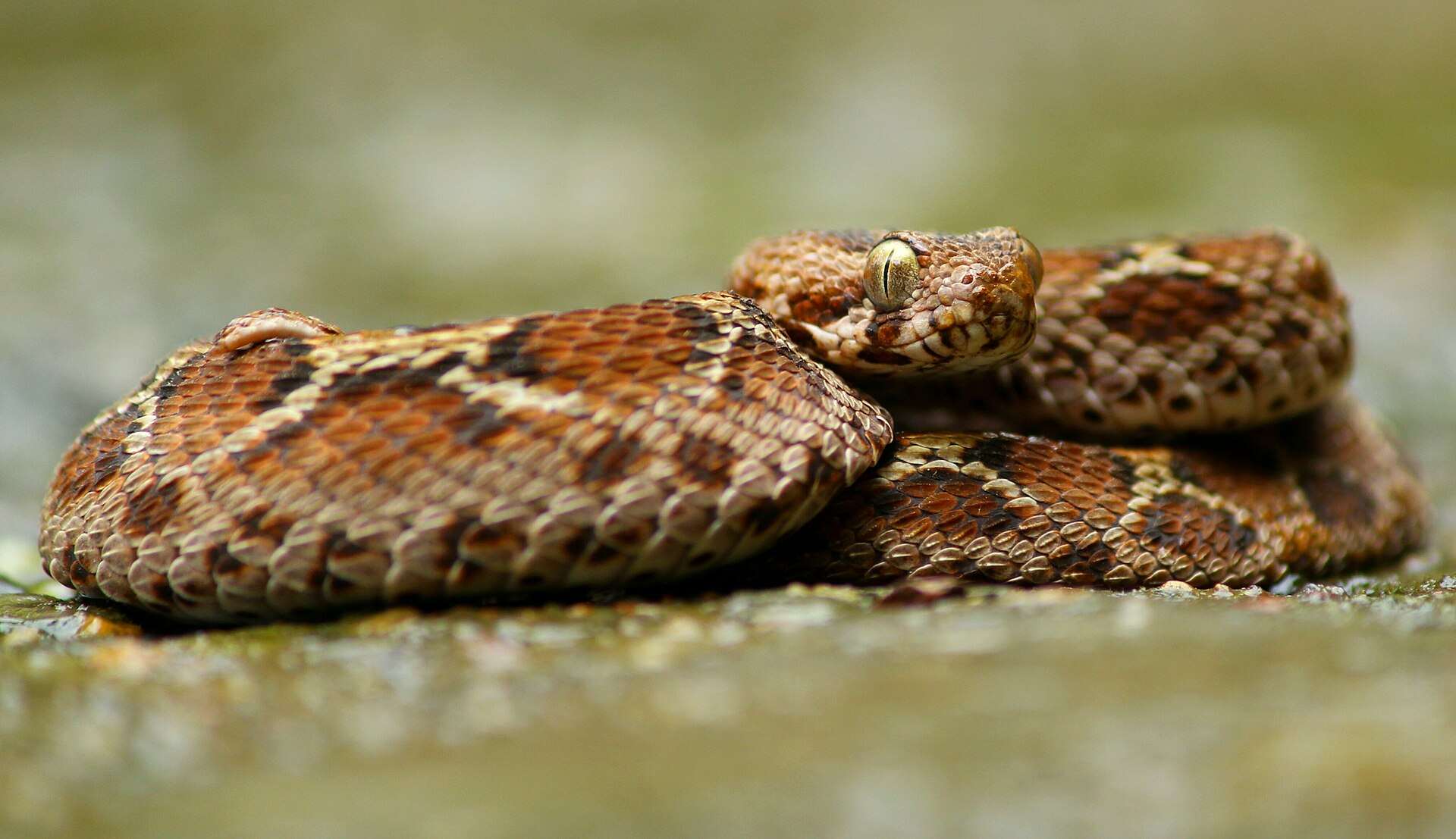
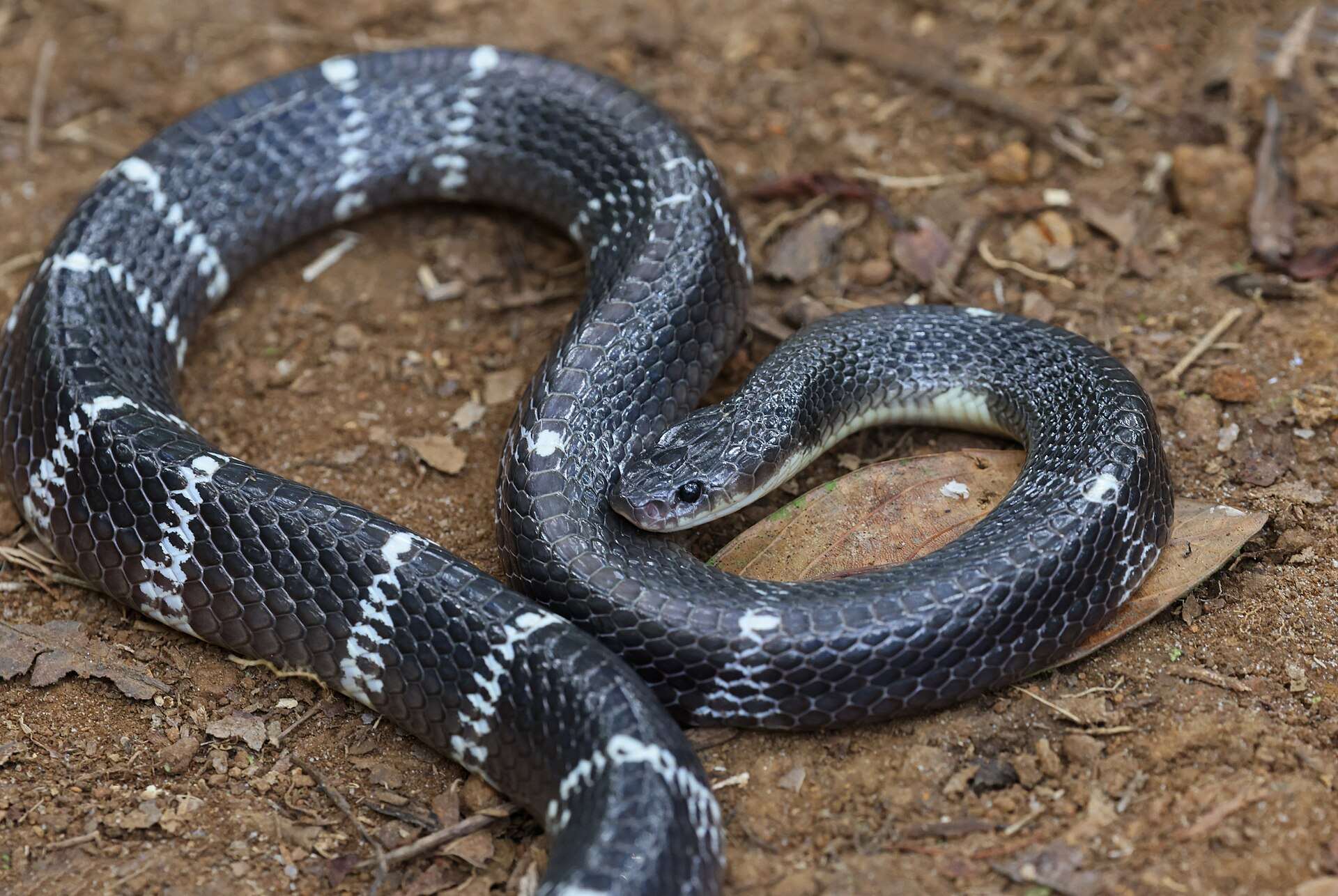
A national survey in 2012–2013 estimated that Sri Lanka has more than 80,000 snakebites, 30,000 envenomings and 400 snakebite deaths each year. WHO ranks the Indian cobra, common krait, Russell's viper and hump-nosed viper as the most medically important species, and a 2008 study found the antivenoms then available ineffective against hump-nosed viper bites.

~80,000

snakebites a year (2012–2013 national survey)1

~400

snakebite deaths a year1

35%

of bites by identified snakes were hump-nosed vipers3

If someone is bitten

Call now. Then go to hospital.

Antivenom is given in hospitals. Don’t wait for symptoms.

  • Australia

    Australian first aid for snakebite uses a pressure immobilisation bandage and splint, and advises not washing the bite.

  • Bangladesh

    A 2017 study noted that the Indian polyvalent antivenom used in Bangladesh is not made from the venoms of local species such as the monocled cobra, and it did not prevent local tissue damage from cobra bites.

  • Brazil

    Antivenom is free in Brazil's public health system (SUS), but it is only given in hospital, at reference hospitals chosen by each state.

  • India

    Indian polyvalent antivenom is raised against the 'Big Four' and may not neutralise some regional species, such as the monocellate cobra in the North-East and the hump-nosed pit viper in the south-west.

  • Indonesia

    Indonesia's own antivenom, made by Bio Farma, is raised against only three species (Javan spitting cobra, banded krait and Malayan pit viper), so it may work poorly for bites by other snakes such as green pit vipers.

  • Kenya

    Antivenom is usually stocked only at hospitals and some health centres, so people bitten in rural areas often need to be referred, and delays are common.

  • Mexico

    Mexico's public health system uses two anti-viper antivenoms; one is made from the venoms of the terciopelo and the Mexican west coast rattlesnake.

  • Nepal

    100 is the police emergency number; call 102 for an ambulance.

  • Nigeria

    Antivenoms made from Nigerian snake venoms (EchiTAb G and EchiTAb-Plus-ICP) have proved effective in clinical trials, while some imported antivenoms made from non-African snake venoms have proved ineffective.

  • Pakistan

    Rescue 1122 handles ambulance and fire emergencies; the police number is 15.

  • Philippines

    The only antivenom made in the Philippines is Philippine Cobra Antivenom, raised against the Philippine cobra; there is no locally made antivenom for pit viper bites.

  • South Africa

    112 works for all emergencies from a mobile phone; 10177 is ambulance and fire, and 10111 is police.

  • Sri Lanka

    119 (or 118) is the police emergency number; call 1990 for an ambulance.

  • United States

    For free, expert 24/7 advice you can also call Poison Help on 1-800-222-1222, but call 911 in an emergency.

Not listed? Call your local emergency number.

Look-alikes

Dangerous or harmless?

Harmless snakes are often killed because they look like dangerous ones. Learn the differences, and still never handle a snake.

Spot the difference
Common krait coiled on bare earth and dry leaves, showing thin white bands on a glossy black body
Medically significant

Common krait

Bungarus caeruleus

Bands
Thin white bands, often in pairs. They fade towards the head.
Colour
Glossy black or bluish-black, with a row of enlarged scales along the middle of the back.
Head
A dark head with a white upper lip.
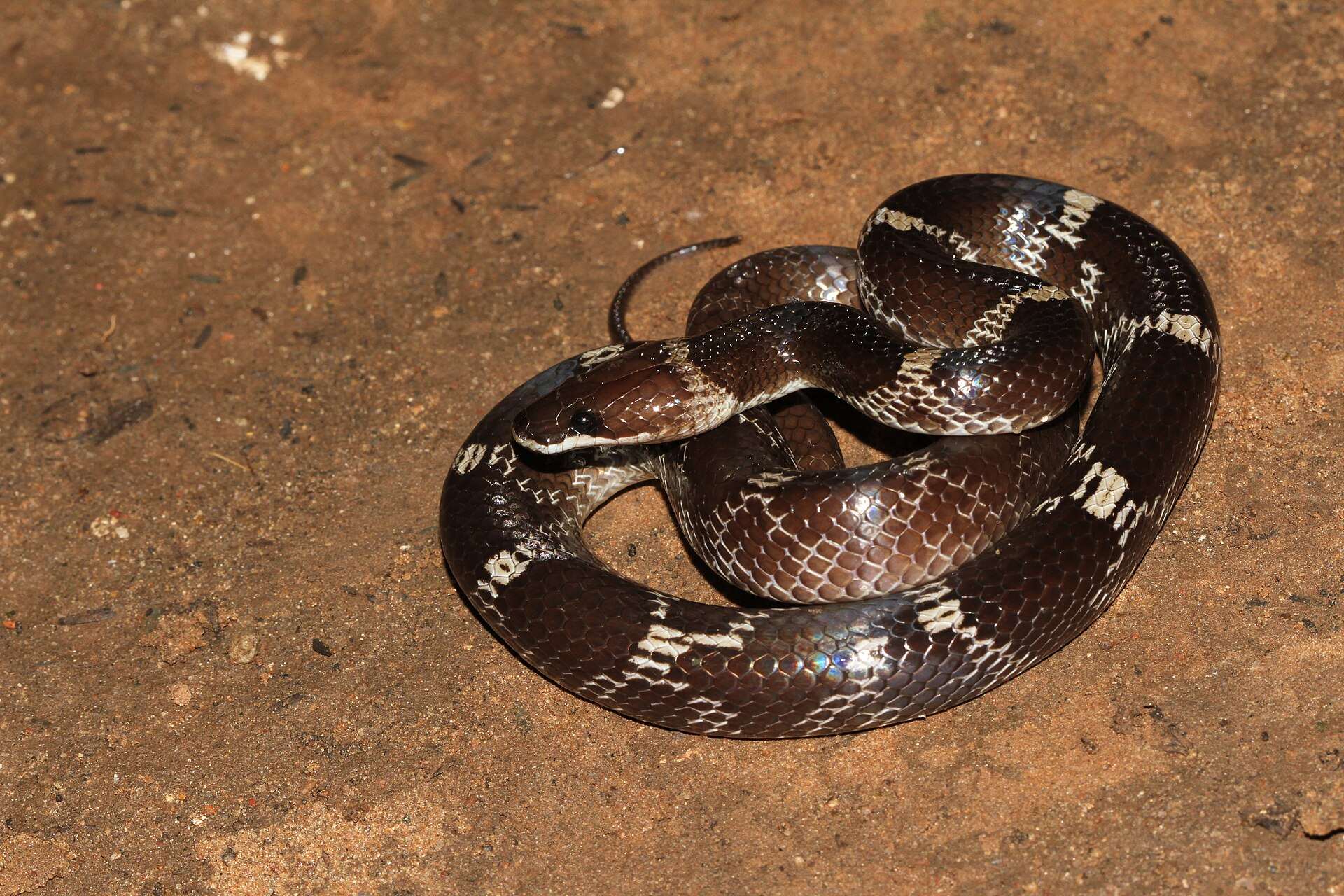
Common wolf snake coiled on reddish soil, showing a dark brown body with white crossbands that widen on the sides
Non-venomous

Common wolf snake

Lycodon aulicus

Bands
White bands that widen or fork on the sides.
Colour
Brown or greyish-brown.
Head
A pale patch behind the head, and a flattened snout that juts past the lower jaw.

Differences from Smith (1943), cited in both profiles. They help you learn the two apart; they are not a safe basis for handling any snake.

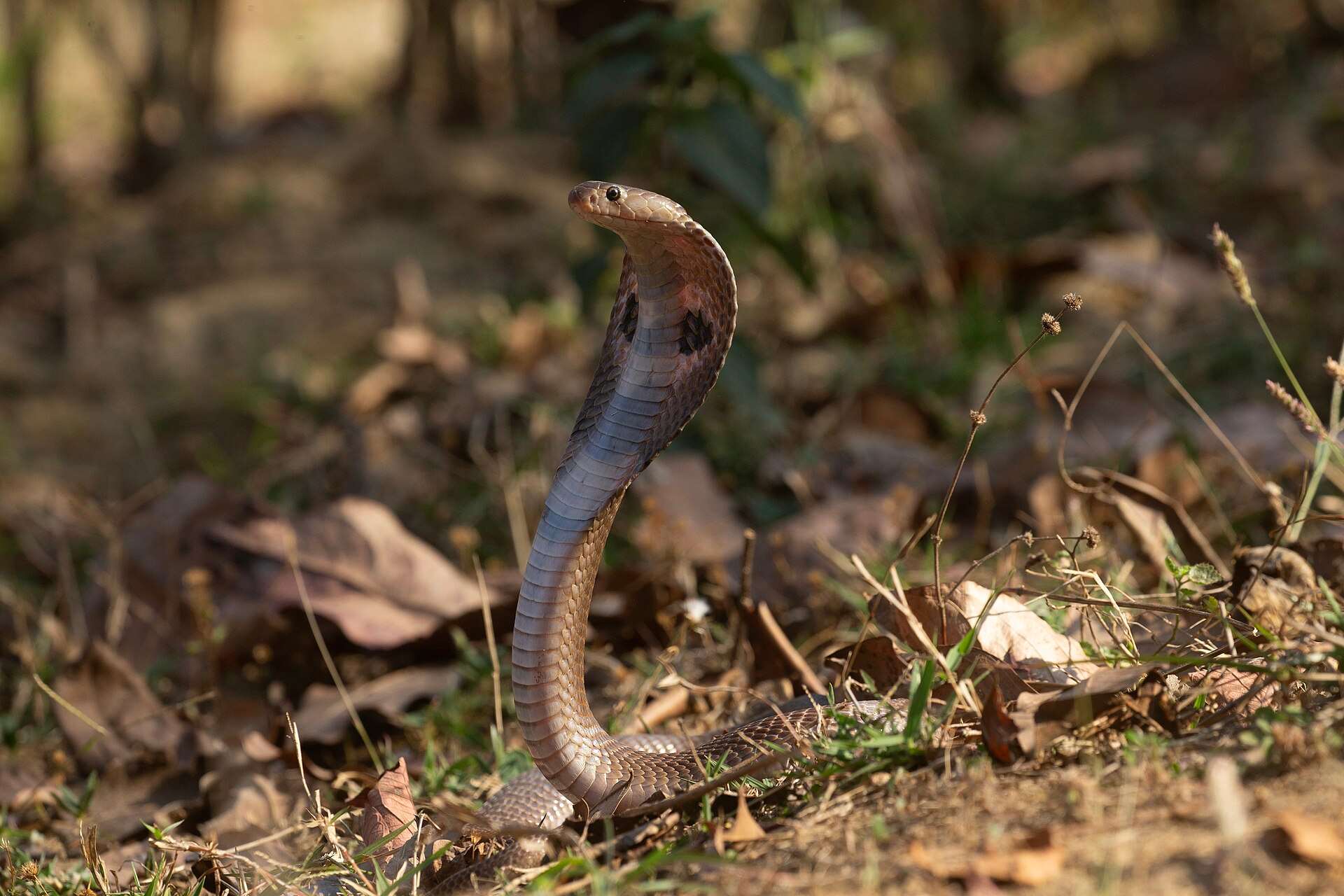
Brown Indian cobra rearing up among dry leaves and grass, its hood spread and dark throat spots visible
Medically significant

Indian cobra

Naja naja

The classic hooded cobra of South Asia. Its colour ranges from grey and brown to black, and its hood often, but not always, carries a spectacle-shaped mark. It is common around farms and villages.

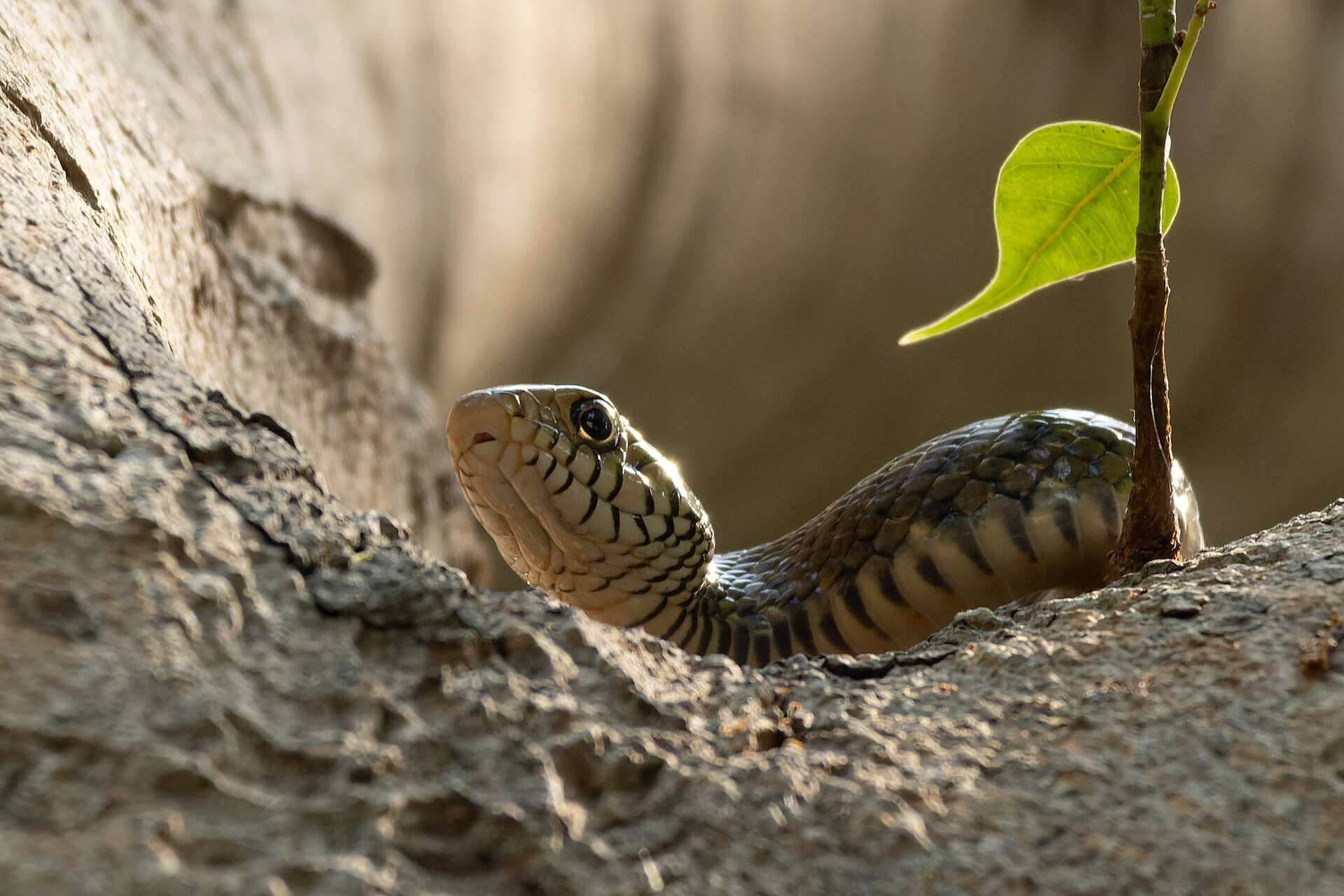
Indian rat snake resting on a tree branch, showing its large eye, black-edged lip scales and dark bands on the body
Non-venomous

Indian rat snake

Ptyas mucosa

A long, slender, non-venomous daytime snake common across southern Asia. It is often seen near farms and villages hunting rats, and is frequently mistaken for a cobra.

Harmless to people

Snakes that won’t hurt you

They may still bite if handled. Give every snake space.

Every species

All 101 snake species recorded in Sri Lanka

8 have a full profile so far. The others are listed by family, without a venom status until they have a sourced profile.

Colubridae43
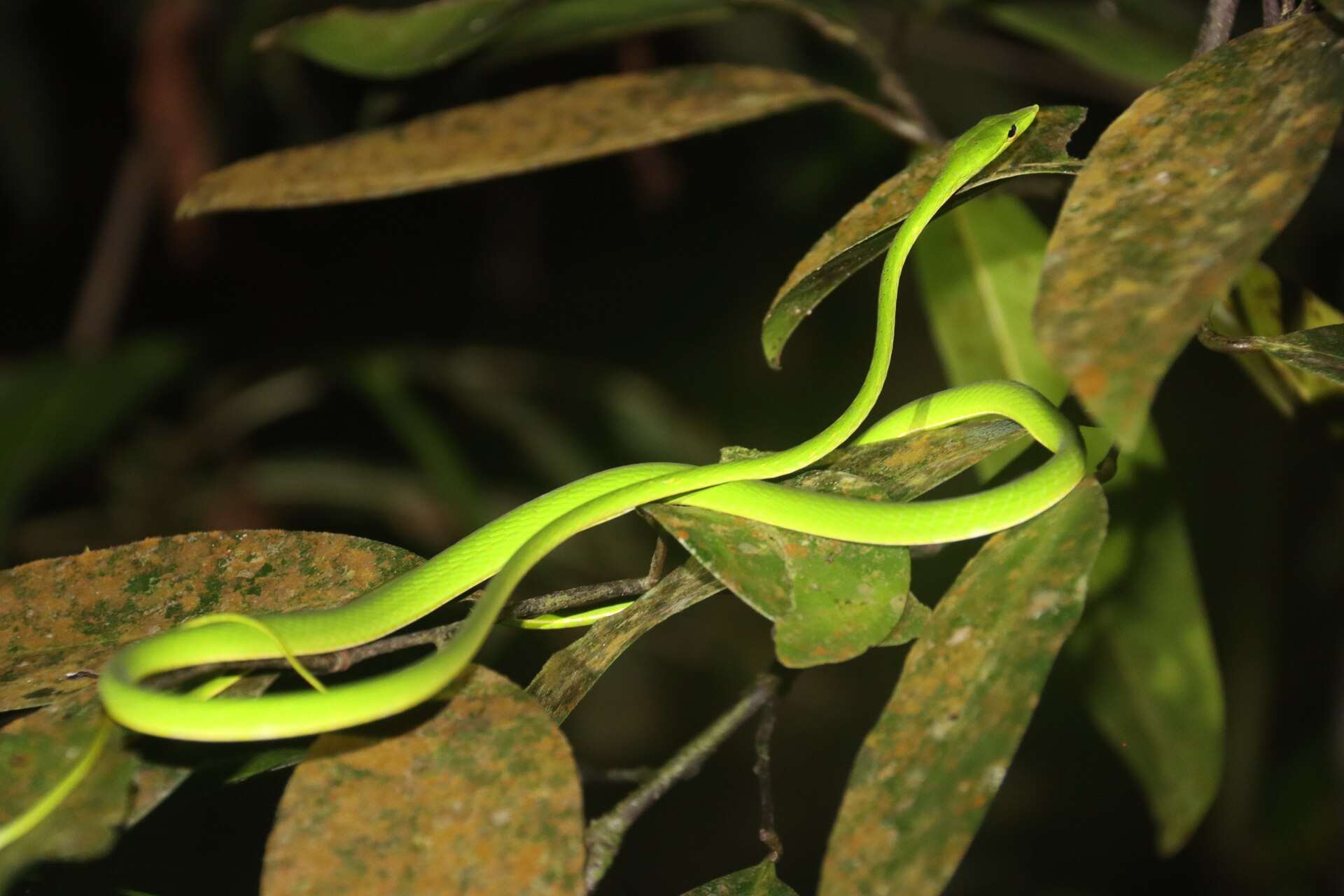
  • Ahaetulla nasutaGreen vine snake
  • Ahaetulla pulverulentaBrown-speckled Whipsnake
  • Aspidura brachyorrhosBoie's Rough-sided Snake
  • Aspidura ceylonensisCeylon Keelback
  • Aspidura copei
  • Aspidura deraniyagalaeSri Lanka Rough-sided Snake
  • Aspidura desilvaide Silva’s Rough-Side Snake
  • Aspidura drummondhayiDrummond-Hay's Rough-sided Snake
  • Aspidura guentheriGünther's Rough-sided Snake
  • Aspidura ravanaiRavana’s rough-side snake
  • Aspidura trachyproctaCommon Rough-sided Snake
  • Atretium schistosumOlive keelback wart snake
  • Boiga barnesiiBarnes’ Cat Snake
  • Boiga ceylonensisSri Lanka Cat Snake
  • Boiga forsteniForsten's Cat Snake
  • Boiga ranawaneiRanawana’s Cat Snake
  • Boiga trigonataCommon Cat Snake
  • Chrysopelea ornataGolden Flying Snake
  • Chrysopelea taprobanicaIndian Flying Snake
  • Coelognathus helenaTrinket Snake
  • Dendrelaphis bifrenalisBoulenger's Bronzeback
  • Dendrelaphis caudolineolatus
  • Dendrelaphis effrenisSinharaja tree snake
  • Dendrelaphis oliveriOliver's Bronzeback
  • Dendrelaphis schokari
  • Dendrelaphis thasuniThasun’s Bronzeback
  • Dendrelaphis tristisCommon Indian Bronze-back
  • Dendrelaphis wickrorumWickramasinghes Bronze-back
  • Fowlea asperrimaBoulenger's Keelback
  • Fowlea piscatorCheckered Keelback
  • Fowlea unicolor
  • Gongylosoma calamariaCalamaria Reed Snake
  • Lycodon carinatusCeylon Wolf Snake
  • Lycodon chithrasekaraiChithrasekara’s bridle snake
  • Lycodon nymphaVellore Bridal Snake
  • Lycodon striatusBarred Wolf Snake
  • Oligodon arnensisCommon kukri snake
  • Oligodon calamarius
  • Oligodon sublineatusDuméril's Kukri Snake
  • Oligodon taeniolatusStreaked Kukuri Snake
  • Rhabdophis ceylonensisSri Lankan Keelback Blossom krait
  • Rhabdophis plumbicolorGreen Keelback
  • Sibynophis subpunctatus(Duméril’s) Black-headed snake
Uropeltidae21
  • Platyplectrurus madurensisTravancore Hills Thorntail Snake
  • Rhinophis blythiiBlyth's Earth Snake
  • Rhinophis dinarzardaeDinarzarde’s’s rhinophis
  • Rhinophis dorsimaculatusPolkadot Earth Snake
  • Rhinophis drummondhayiDrummond-Hay's Earth Snake
  • Rhinophis erangavirajiEranga Viraj’s shieldtail snake
  • Rhinophis gunasekaraiGunasekara’s sheildtail
  • Rhinophis homolepisTrevelyan's Earth Snake
  • Rhinophis lineatusStriped Rhinophis
  • Rhinophis martinMartin’s shieldtail
  • Rhinophis melanogasterGray's Earth Snake
  • Rhinophis mendisiMendis’ rhino- phis or Mendis’ shieldtail
  • Rhinophis oxyrhynchusSchneider's Earth Snake
  • Rhinophis philippinusPeters' Philippine Earth Snake
  • Rhinophis phillipsiPhillipps' Earth Snake
  • Rhinophis porrectus
  • Rhinophis punctatusMüller's Earth Snake
  • Rhinophis roshanpereraiRoshan Perera’s shieldtail (or Roshan Perera’s Rhinophis)
  • Rhinophis saffragamusLarge Shieldtail Snake
  • Rhinophis tricoloratus
  • Rhinophis zigzagZigzag Rhinophis
Elapidae18
  • Bungarus caeruleusCommon krait
  • Bungarus ceylonicus
  • Calliophis haematoetronBlood-bellied coralsnake
  • Hydrophis bituberculatusPeters' Sea Snake
  • Hydrophis inornatusInornate Sea Snake
  • Hydrophis jerdoniiSaddle-backed sea snake
  • Hydrophis mamillarisBombay Sea Snake
  • Hydrophis nigrocinctusBlack-banded sea snake
  • Hydrophis obscurusRussel's Sea Snake
  • Hydrophis ornatusOrnate Reef seasnake
  • Hydrophis platurusPelagic Sea Snake
  • Hydrophis spiralisYellow Sea Snake
  • Hydrophis stricticollisCollared Sea Snake
  • Hydrophis viperinusViperine Sea Snake
  • Laticauda colubrinaYellow-lipped sea krait
  • Laticauda laticaudataBlue-banded Sea Krait
  • Microcephalophis graciliscommon small-headed sea snake
  • Naja najaSpectacled cobra
Typhlopidae8
  • Indotyphlops combank
  • Indotyphlops lankaensisSri Lanka Worm Snake
  • Indotyphlops leucomelasPied Worm Snake
  • Indotyphlops malcolmiMalcolm's Worm Snake
  • Indotyphlops tenebrarum
  • Indotyphlops veddaeVedda Worm Snake
  • Indotyphlops violaceusViolet Worm Snake
  • Pseudoindotyphlops porrectusSlender Worm Snake
Viperidae6
Gerrhopilidae2
  • Gerrhopilus ceylonicusSri Lanka Worm Snake
  • Gerrhopilus mirusJan's Worm Snake
Boidae1
  • Eryx conicusCommon Sand Boa
Cylindrophiidae1
  • Cylindrophis maculatusPipe Snake
Homalopsidae1
  • Gerarda prevostianaGerard's Water Snake

Source: Uetz, P. et al. (eds.), The Reptile Database, version 2026-06, via the Catalogue of Life (COL26.9). CC BY 4.0. Ranges in the source can be incomplete.

References

  1. 1

    Ediriweera DS, Kasturiratne A, Pathmeswaran A, et al. Mapping the risk of snakebite in Sri Lanka – a national survey with geospatial analysis. PLoS Negl Trop Dis. 2016;10(7):e0004813. doi.org

  2. 2

    World Health Organization. Guidelines for the production, control and regulation of snake antivenom immunoglobulins. WHO Technical Report Series No. 1004, Annex 5 (2017), Appendix 1: medically important venomous snakes of Sri Lanka. cdn.who.int

  3. 3

    Ariaratnam CA, Thuraisingam V, Kularatne SA, et al. Frequent and potentially fatal envenoming by hump-nosed pit vipers (Hypnale hypnale and H. nepa) in Sri Lanka: lack of effective antivenom. Trans R Soc Trop Med Hyg. 2008;102(11):1120–1126. pubmed.ncbi.nlm.nih.gov

Try “krait”, “cobra” or Naja. Typos are fine.